
The Indigenous women protecting the Colombian Amazon by boat
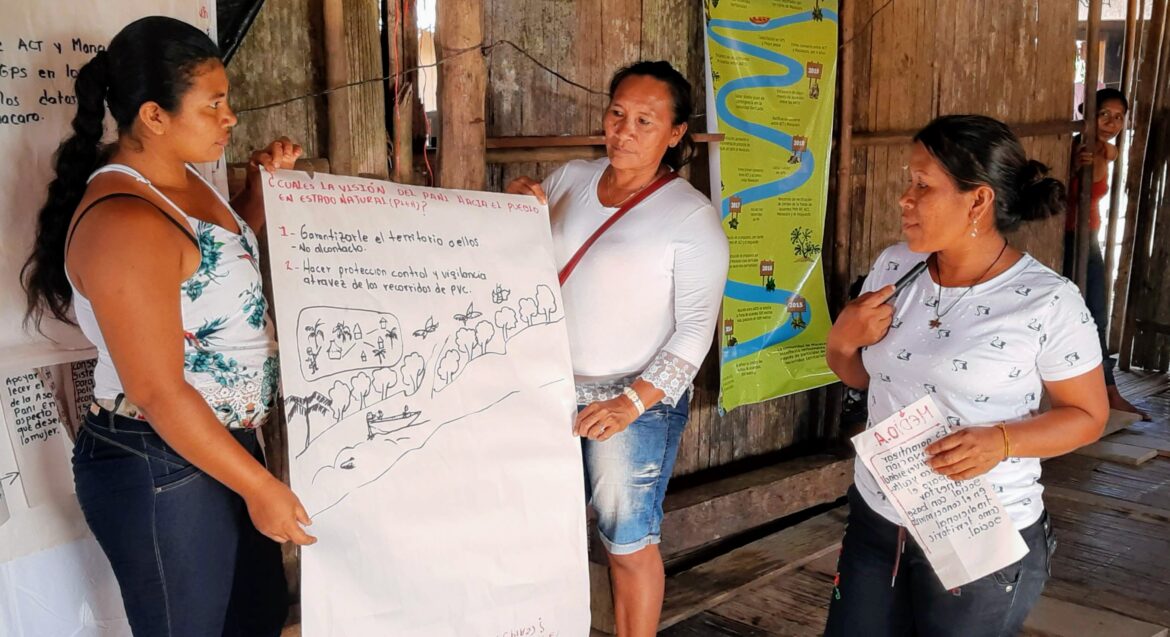
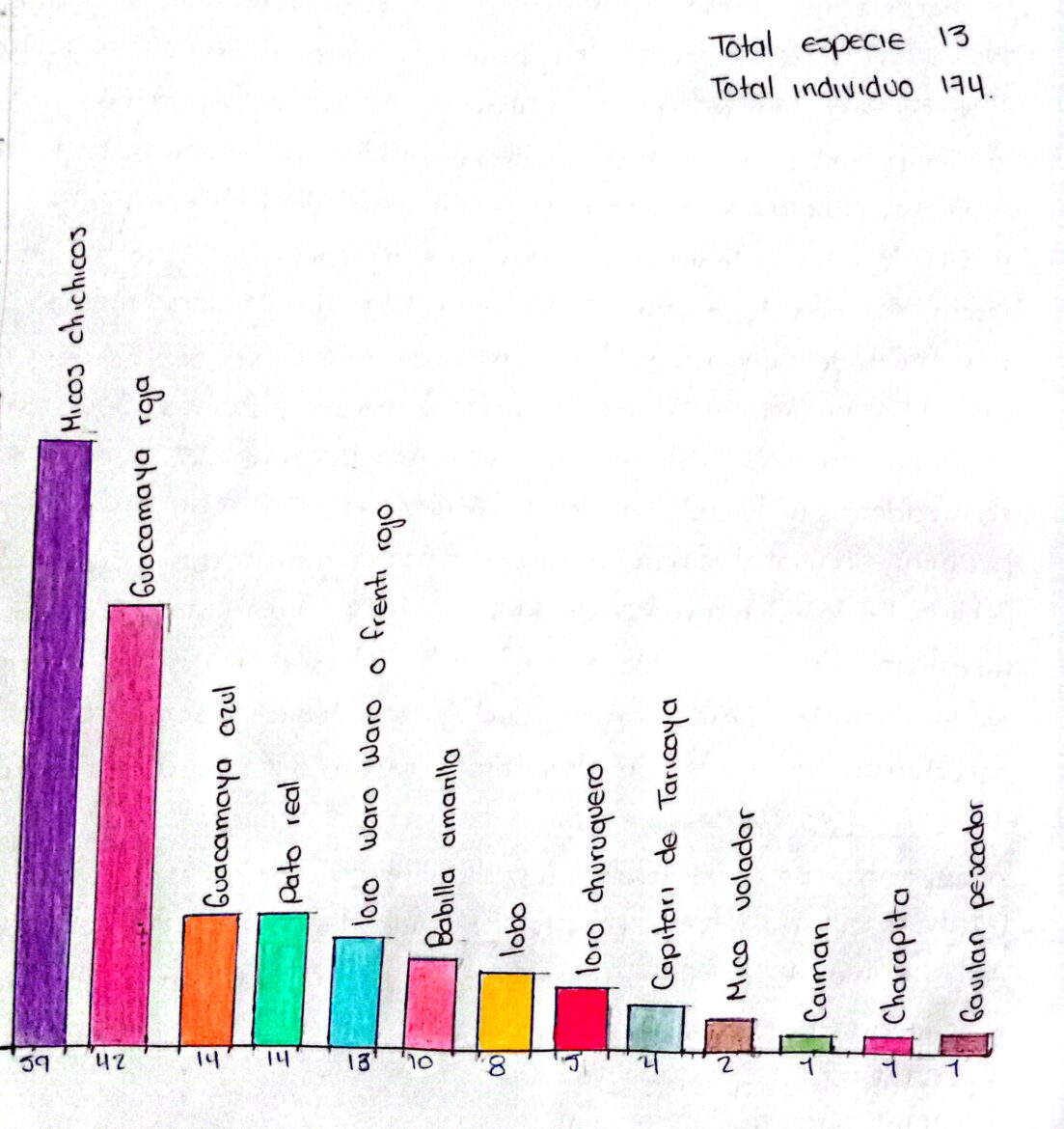
In the Indigenous community of Manacaro in the Colombian Amazon, women are helping to lead the work of territorial protection. Several times a week, Delia Gittoma, an Indigenous leader of the Carijóna people, sets out in a small, motorized boat to record animal species and human activity, and document threats to the forest.
One person operates the motor, and the other collects data in a notebook and computer tablet during a 12 km journey from the Vildosa Ravine to the mouth of the Río Bernardo River. “The tablet is used to take coordinates, and when a species reveals itself, a photo is taken,” Delia says. “That is how the records of the sighted species and the threats present in that territory are collected.”
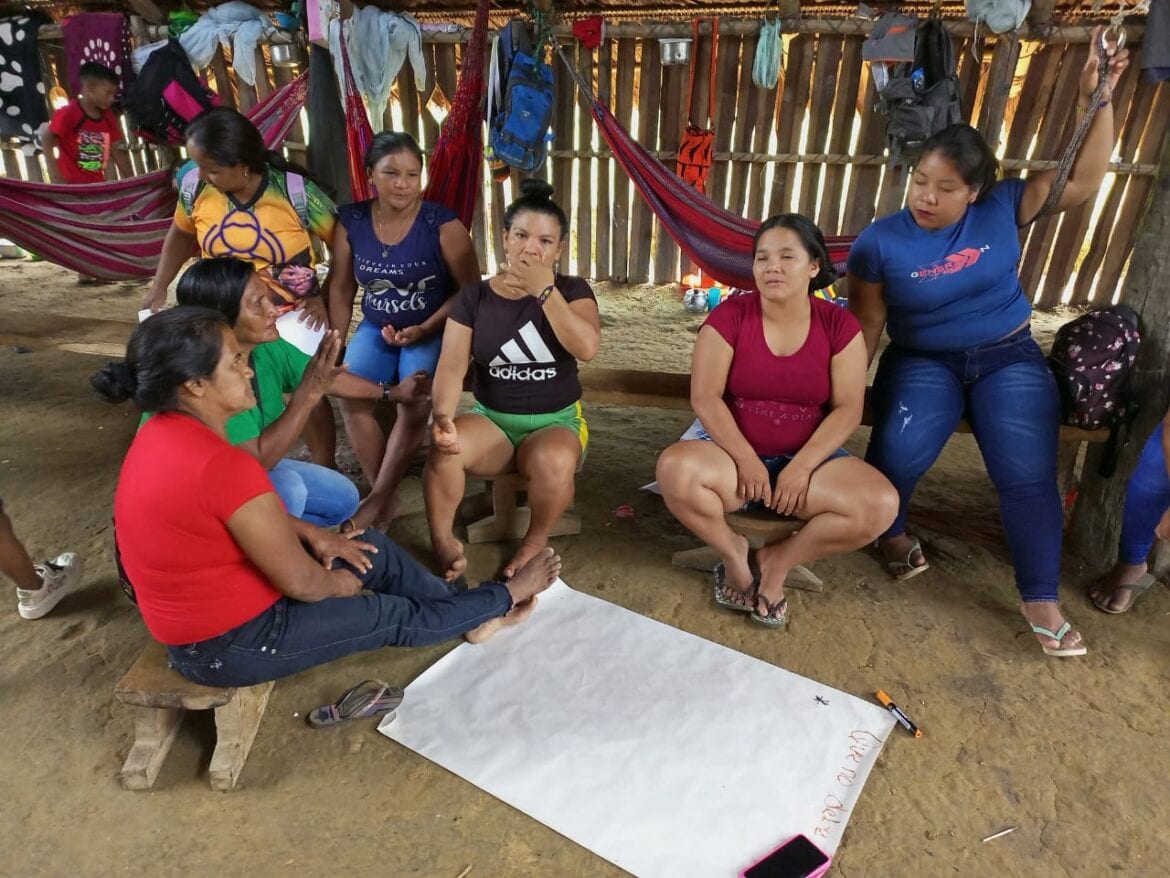
In Delia’s community of about 25 people, it’s the women — often accompanied by their children — who make the journey up and downstream, but she says it wasn’t always this way.
“Before, it was work done by men. Today, everything has changed, and now we are the protagonists carrying out these control and surveillance patrols,” Delia says.
But it’s not just species like pink river dolphins, turtles, and tapirs that they’re monitoring. This region of the Colombian Amazon is home to the Yuri-Passe, an Indigenous community that has lived in voluntary isolation from western society for centuries. They are the only uncontacted Indigenous Peoples officially recognized by the Colombian state.
Colombia’s Indigenous peoples in isolation — and the communities that protect them
In 2024, the government dedicated 2.3 million acres of this area as an “intangible zone,” where all economic activities and human intrusion are prohibited. Neighboring Indigenous communities like Delia’s refer to their neighbors in isolation as groups in their estado natural, or natural state, and help them to remain uncontacted by monitoring the edge of the intangible zone for outside threats, like illegal mining or trafficking. They are also looking for signs of human activity, possibly from the Yuri-Passe.
“They too, despite their natural state, have their own territories, just like we do — except that they are peoples in a natural state who live in the jungle, inside the forest. That is why it is important — because they have their own values as well, just as anyone has their rights,” Delia says.
Not far from Delia’s home, Adriana Tanimuca, an Indigenous leader of the Tanimuca people in the Curare Los Ingleses reserve on the lower Caquetá River, is also helping to monitor for threats to Indigenous peoples in voluntary isolation. Like Delia, she sets out in the morning, but her journey is longer and involves a full day’s travel by boat from the Vildosa Ravine to a cabin at Puerto Caimán, where she will stay for about a month.
“You also have to speak with the traditional knowledge holder so he can perform a spiritual prevention ceremony for the month ahead, because you’re out there deep in the forest where almost nobody goes,” Adriana explains. “That kind of work is for people who are truly committed — willing to take on whatever comes, good or bad — and who genuinely want to go out and spot species, to have a kind of appreciation for the animals, the birds, the mammals, everything that happens out there.”
Leaving her home for a month is hard, Adriana says. She tidies her small house and tends to her chagra, or garden, before setting out, knowing that she won’t find things in the condition she left them in upon her return. Despite the discomfort of the trip, she’s inspired to do this surveillance work to protect the forest for future generations.
“I love protecting species, I love spotting animals, traveling along the rivers, and paddling by oar. That comes naturally to me,” Adriana says.
A new threat takes hold
Both women are part of a broader effort supported by the Amazon Conservation Team (ACT), which has helped Indigenous leaders collect data on a region facing increasing threats, both ecological and cultural, explains Maria Camila Gonzalez, an environmental researcher at ACT who works closely with Indigenous communities in territorial monitoring.
“In the case of the Amazon, it has almost always been a drug trafficking route, but not a place of actual establishment and settlement. Now it has become a place where groups are setting up permanently,” Gonzalez says.
During the pandemic in 2020, a power vacuum was created. And where there was state absence, other groups took hold, with their impact permeating into Indigenous communities. Sometimes children and teenagers choose to leave the community to work elsewhere, but Gonzalez explains that forced recruitment of children as young as 12 into these illicitly operating groups is an increasing problem.
“This is also one of the crises the Amazon is living through — having a population that is mostly older, with a shrinking youth population, both because of young people leaving to study and build lives elsewhere, and because of forced recruitment,” Gonzalez says.
Women leading territorial monitoring efforts — and often bringing children along — is one way to better connect the next generation to their territory. The knowledge and skills that community members gain conducting monitoring builds their capacities to apply for jobs, such as national park guards.
Gonzalez says one of the most important aspects of the monitoring and surveillance work is that it empowers Indigenous communities to speak directly to the state and share their findings. “It is one of the things we are currently working to support the territories on — so that these protection strategies do not remain only at the community level, but become a full Indigenous monitoring initiative that is also supported and recognized by the state as a mechanism for generating knowledge and overseeing the territory — not from an external entity such as national parks, environmental corporations, private organizations, or NGOs, but from the Indigenous communities themselves,” Gonzalez says.
For Delia and Adriana, every journey by boat, every species recorded, and every boundary patrolled is an act of stewardship — not just for the forest, but for the generations who will inherit it.