

Insights from Juan Carlos Cruz, Manager, Science & Conservation, ACT’s Ancestral Tides Program
When people think about conservation technology, they often picture satellite transmitters, GPS devices, drones, or digital mapping. But for the Amazon Conservation Team’s (ACT’s) Ancestral Tides program, technology is only part of the story.
Across the coasts of Latin America, Indigenous Peoples and local communities are , with the help of ACT, combining generations of ecological knowledge with modern scientific tools to protect sea turtles, monitor coastal ecosystems, and strengthen stewardship of the territories they have watched over for centuries. Here, technology doesn’t replace traditional knowledge: it helps communities document that knowledge, strengthen it, and use it to guide conservation decisions.
As Juan Carlos Cruz, Ancestral Tides’ Manager of Science & Conservation, explains, the program is demonstrating a different way of approaching conservation, one where innovation and ancestral knowledge contribute side by side.
“Together, innovation and ancestral wisdom are creating a new model of conservation that is more collaborative, more effective, and better equipped to protect both biodiversity and biocultural heritage for future generations.”
Technology as a Tool for Communities
Technology has transformed the way conservation data can be collected and shared, even in some of the world’s most remote coastal regions.
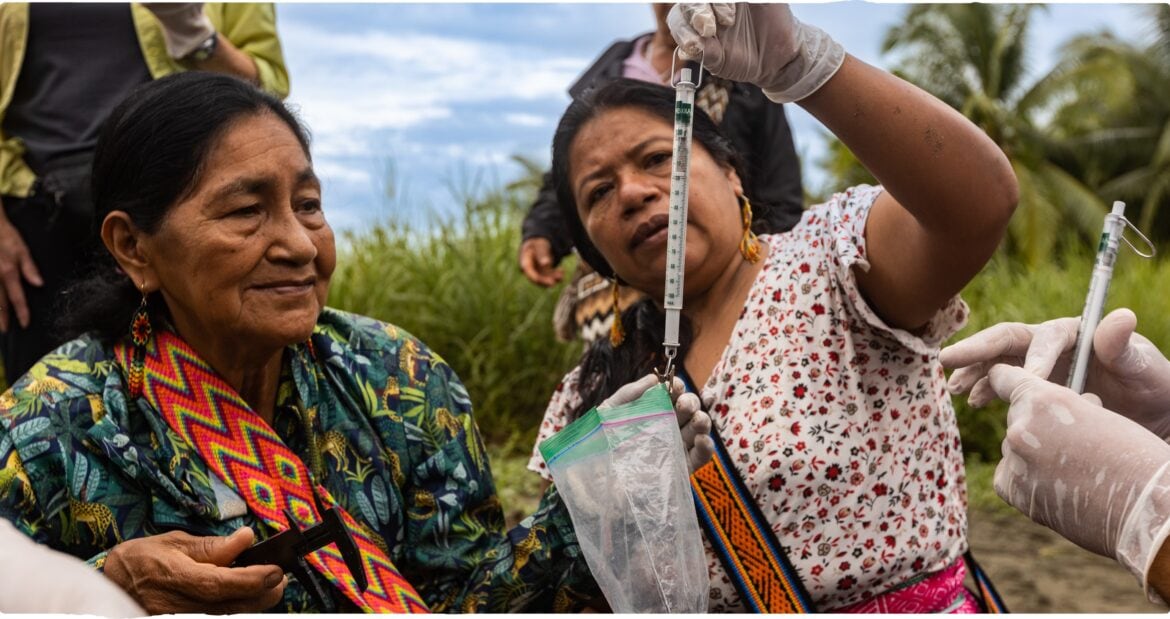
Community monitors use digital platforms like Survey123 to record biological observations directly from the field. GPS devices document nesting events with precision, while cloud-based systems allow information collected offline to be synchronized once an internet connection becomes available.
These tools make it possible to standardize information collected across multiple countries while ensuring that communities remain at the center of the process.
Instead of scientists arriving to collect data, Indigenous and local community members are the ones conducting monitoring, documenting observations, and helping shape conservation strategies.
Where Traditional Knowledge and Science Meet
For Juan Carlos, one of the greatest strengths of Ancestral Tides is that it recognizes the value of different ways of understanding nature.
“Indigenous Peoples possess a profound understanding of the complex ecological systems within their territories, developed through centuries of direct interaction with the natural environment.”
This knowledge has been built through continuous observation, experimentation, and adaptation over countless generations. It includes understanding seasonal changes, wildlife behavior, nesting cycles, ocean conditions, and ecological relationships that cannot always be captured through short-term scientific studies.
Scientific methods bring another perspective. Biological monitoring, satellite telemetry, geographic information systems (GIS), and digital databases help document patterns over time and across large geographic areas.
Rather than competing with one another, these knowledge systems become stronger together.
This approach reflects a growing international recognition that Indigenous knowledge and scientific research are complementary systems for understanding and protecting biodiversity.
“Recognizing and respecting Indigenous knowledge is essential for achieving effective and sustainable biodiversity conservation.”
Monitoring the Coast, One Beach at a Time
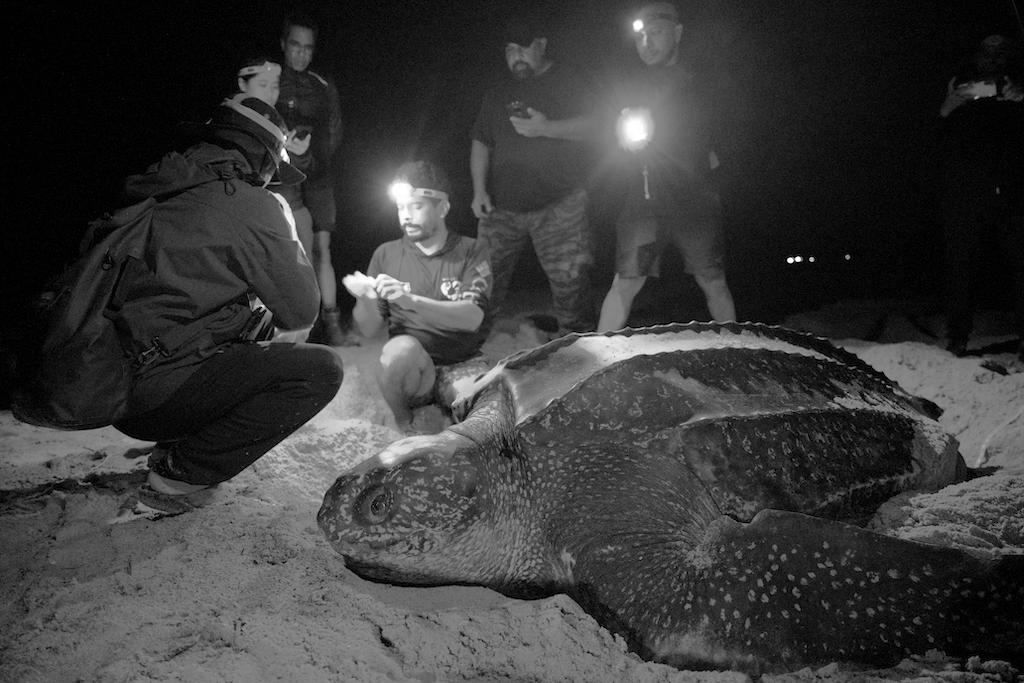
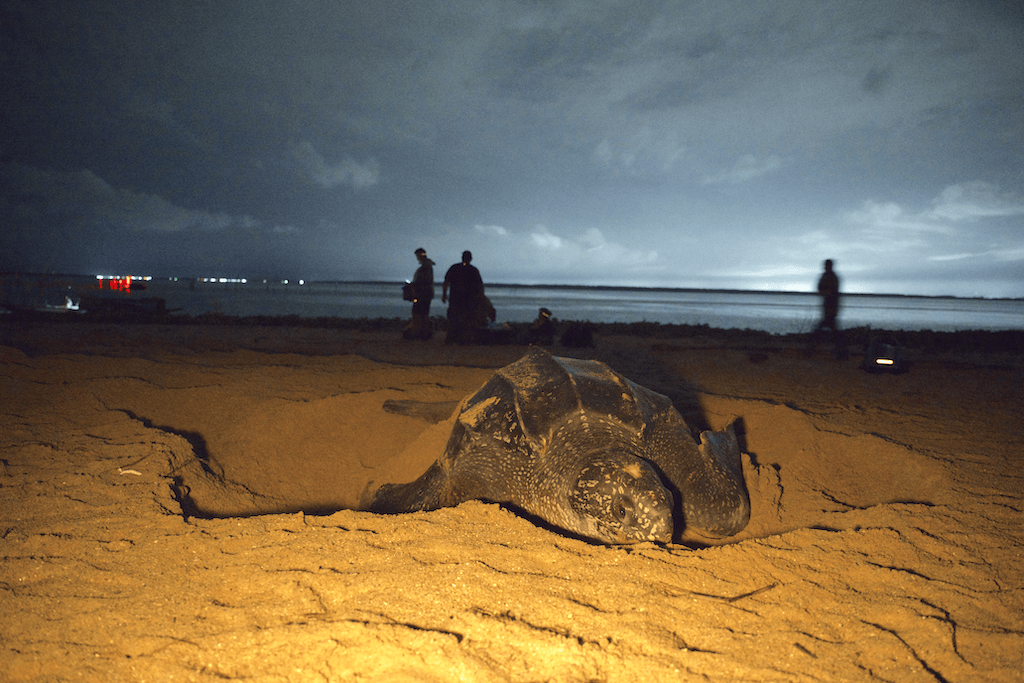
Every nesting season, trained community members patrol beaches, often through the whole night and continuing into sunrise
Morning surveys focus on locating fresh nests, documenting turtle activity, and identifying nest at risk from flooding, erosion, or predators. Vulnerable nests may be carefully relocated to protected hatcheries, where temperature and humidity are monitored throughout incubation.
Night patrols provide another opportunity to collect valuable information. Community monitors identify turtle species, measure individuals, tag turtles when appropriate, document nesting behavior, and record every observation using standardized digital protocols.
Together, these observations create long-term datasets that allow communities and scientists to monitor population trends, evaluate conservation efforts, and better understand how coastal ecosystems are changing over time.
Following Sea Turtles Beyond the Beach
Sea turtles spend only a small part of their lives on nesting beaches. Most of their lives unfold across vast stretches of ocean.
To better understand those journeys, Ancestral Tides uses satellite transmitters attached to selected turtles after nesting.
“Satellite tracking is providing unprecedented insights into the movements of hawksbill turtles after they leave their nesting beaches.”
These transmitters reveal migration routes, feeding grounds, breeding areas, and important marine habitats that would otherwise remain unknown.
This information helps conservation efforts expand beyond protecting nesting beaches to safeguard the entire network of ecosystems that sea turtles depend upon throughout their lives.
As Juan Carlos often says:
“The turtles tell us where we need to work.”
Better Information, Better Decisions
In this context, data collection is valuable only if it leads to better conservation.
Information gathered by communities helps identify priority nesting beaches, evaluate hatchery success, understand population trends, and detect changes caused by climate change, coastal development, pollution, or erosion.
Because the same monitoring methods are used across multiple countries, the data can also be compared at a regional scale.
This allows governments, researchers, Indigenous organizations, and conservation partners to identify shared challenges and coordinate efforts across migratory routes that span thousands of miles.
Technology becomes a bridge, not only between science and traditional knowledge, but also between communities working toward the same conservation goals.
When Traditional Knowledge Leads Discovery
Some of the most meaningful discoveries begin long before technology enters the picture.
Juan Carlos recalls working alongside the Comcaac people in Sonora, Mexico, where community elders had long described green sea turtles feeding in the El Infiernillo Channel in the Gulf of California.
For generations, this knowledge had been passed down through oral tradition.
Through collaborative fieldwork, interviews, and modern monitoring technologies, scientists were able to document these same feeding grounds, confirming what the community had known for generations.
For Juan Carlos, experiences like this demonstrate why both knowledge systems matter.
“Integrating traditional ecological knowledge with science not only confirms ancestral wisdom but also creates more effective strategies to protect both biodiversity and the cultural heritage that has safeguarded it for generations.”
Building a Regional Network for Conservation
One of the most exciting aspects of Ancestral Tides is that every monitoring effort contributes to something much larger.
By using standardized methodologies and digital tools across all project sites, communities are helping build what Juan Carlos believes will become one of the region’s most important sea turtles and coastal conservation networks.
“As we continue implementing standardized methodologies across our project sites, we are laying the foundation for what we believe will become the largest Indigenous-led sea turtle monitoring network in Latin America.”
Spanning both the Pacific and Atlantic coasts, this growing network connects Indigenous Peoples and local communities in Mexico, Costa Rica, Panama, Colombia, and Suriname.
Each community contributes locally collected information while maintaining ownership of its knowledge and stewardship practices. Together, these efforts create a clearer picture of sea turtle populations across Latin America and strengthen collaboration among the people working to protect them.
Looking Ahead
For Juan Carlos, the future of conservation isn’t about choosing between technology and traditional knowledge. It’s about recognizing that each has something essential to contribute.
Technology can help communities collect better data, understand ecological patterns at larger scales, and strengthen collaboration across borders. Traditional knowledge provides the deep understanding of place, relationships, and stewardship that has sustained these ecosystems for generations.
Together, they are shaping a model of conservation that is both innovative and deeply rooted in culture.
As Ancestral Tides continues to grow, that combination of ancestral knowledge, community leadership, and modern technology is helping protect not only sea turtles and coastal ecosystems, but also the enduring relationship between people and the places they call home.
Written by: Barbara Onkle
Don’t miss these powerful stories and updates. Sign up for our newsletter today!
Share this post
Bring awareness to our projects and mission by sharing this post with your friends.