

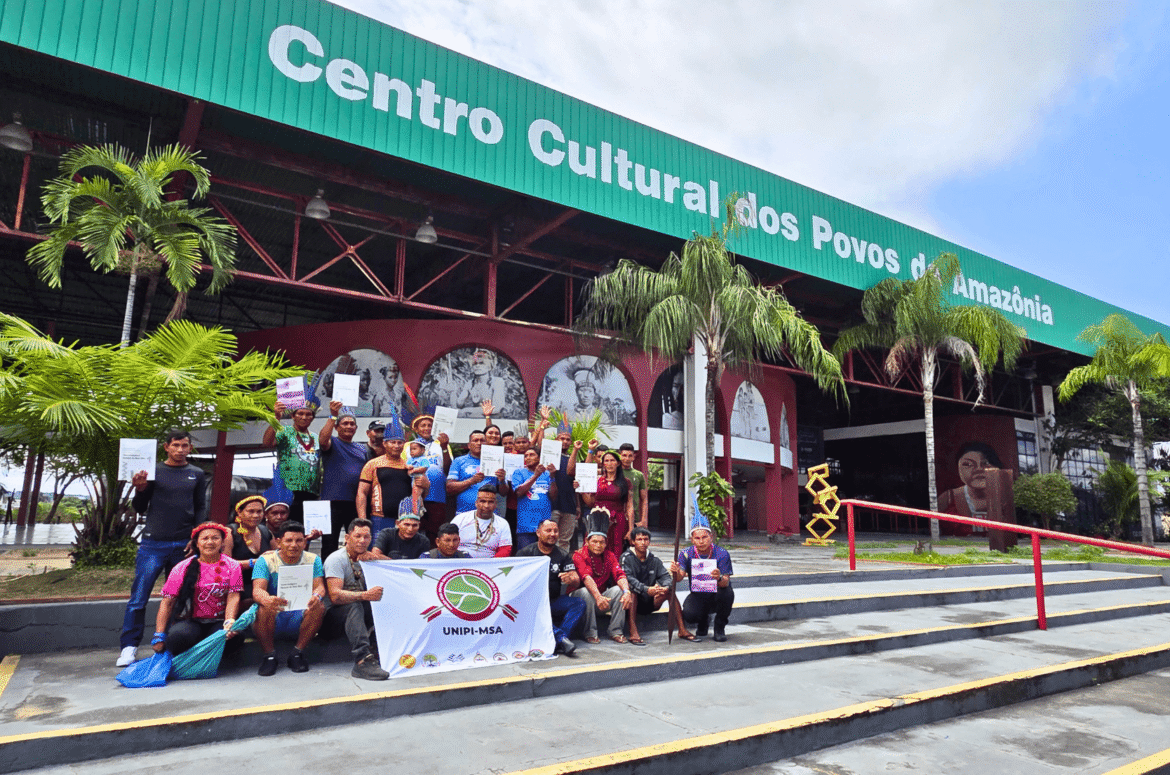
On July 7, 2026, Indigenous leaders, representatives of civil society organizations, public agencies, and partner institutions gathered in Manaus in the Brazilian state of Amazonas to celebrate the launch of the Territorial and Environmental Management Plans (PGTAs) for the Paraná do Boá-Boá and Uneiuxi Indigenous Territories. Developed by the Indigenous Peoples themselves over years of dialogue and collective planning, the documents represent more than management tools: they strengthen community organization around the practices of territorial care and management that these peoples have carried out for generations. Throughout their development, the PGTAs also created spaces for dialogue, reflection, and collective decision-making, consolidating priorities defined by the communities and expanding their ability to engage with public authorities in the defense of their rights.
The launch was organized by the Coordinating Body of Indigenous Organizations and Peoples of Amazonas (APIAM) and ACT-Brasil, bringing together leaders from the Nadëb and Kanamary peoples as well as representatives from the Federation of Indigenous Organizations of the Rio Negro (FOIRN), the Coordination of Indigenous Organizations of the Brazilian Amazon (COIAB), the Coordination of Indigenous Associations of the Middle and Lower Rio Negro (CAIMBRN), the Association of Indigenous Communities of the Middle Rio Negro (ACIMRN), the Union of Indigenous Peoples of the Middle Solimões and Tributaries (UNIPI-MSA), the Mamirauá Institute, the Indigenous Missionary Council (CIMI), the Socioenvironmental Institute (ISA), and other partner organizations, along with representatives of public agencies.
The event was also marked by the presence of the largest Nadëb delegation ever gathered in Manaus: 26 representatives. For many participants from the Nadëb and Kanamary Peoples, this was their first visit to the capital of Amazonas, making it a symbolic moment that expanded their presence in spaces for dialogue, coordination, and the development of public policies focused on their territories.
A New Chapter Begins
Throughout the event, Indigenous leaders emphasized that the launch of the PGTAs does not mark the end of a process, but rather the beginning of a new phase: sustaining the agreements collectively developed over four years and turning the priorities outlined in the documents into concrete action in their territories.
The need to strengthen Indigenous education emerged as a recurring priority in the discussions. For the communities, ensuring access to schools, teachers, and appropriate educational policies means safeguarding the continuity of Indigenous languages, traditional knowledge, and the relationship between their peoples and their territories.
Other priorities highlighted included expanding access to healthcare, strengthening territorial protection, supporting sustainable resource management and income generation, and strengthening Indigenous governance. The next challenge will be to expand coordination and advocacy with public agencies so that these priorities can move forward through the implementation of the PGTAs.
The Challenge Now Is Implementation
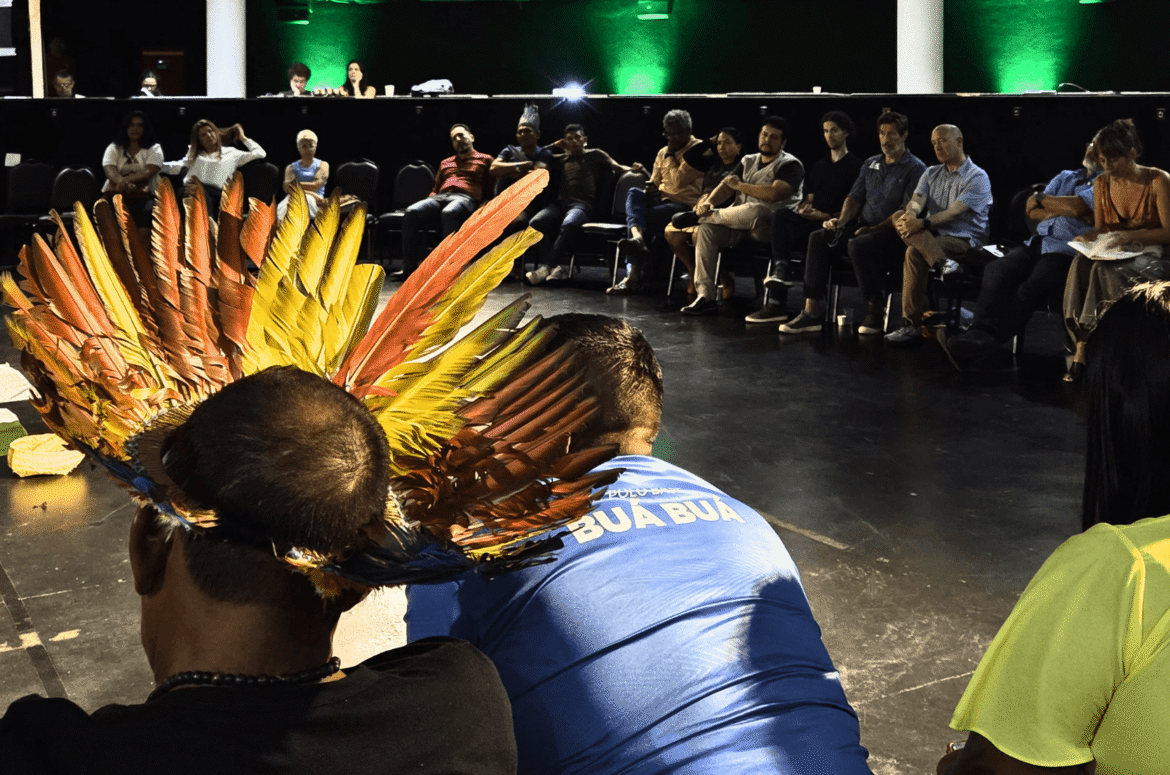
During the launch, APIAM, COIAB, FOIRN, CAIMBRN, ACIMRN, UNIPI-MSA, ACT-Brasil, the Mamirauá Institute, CIMI, and other partner organizations reaffirmed their commitment to strengthening the coordination and advocacy needed to ensure that the priorities outlined in the PGTAs advance with the responsible public agencies. Effective implementation of the plans depends on ongoing dialogue between Indigenous Peoples, partner organizations, and public authorities, as well as on government action to implement public policies focused on Indigenous territories.
For the Kanamary leader Márcia da Silva, the plans also strengthen communities’ ability to build new partnerships and access public policies.
“We left Japurá for Manaus because the PGTA is very important. Through it, we seek our rights to education, healthcare, and our territory. It also helps us find partners and support, and teaches us how to work with projects that strengthen our communities.”
Participants agreed that implementing the PGTAs depends on joint action among Indigenous peoples, civil society organizations, and various public agencies.
A Collective Effort
The PGTAs are the result of approximately four years of collective work led by the Indigenous peoples themselves through workshops, community gatherings, and discussions held in their territories. The PGTA of the Paraná do Boá-Boá Indigenous Territory was developed with technical and financial support from the Coordination of Indigenous Organizations of the Brazilian Amazon (COIAB) and ACT-Brasil, along with technical cooperation from the Mamirauá Institute and support from the Indigenous Missionary Council (CIMI). The PGTA of the Uneiuxi Indigenous Territory was developed with technical and financial support from the Federation of Indigenous Organizations of the Rio Negro (FOIRN), the Coordination of Indigenous Associations of the Middle and Lower Rio Negro (CAIMBRN), the Association of Indigenous Communities of the Middle Rio Negro (ACIMRN), and the Socioenvironmental Institute (ISA), in partnership with the Indigenous peoples of the territory.
This process brought together different generations to reflect on the history of their territories, document knowledge, identify challenges, and establish agreements around priorities and approaches to territorial management. The workshops strengthened community organization and reaffirmed practices of care and protection that these peoples have carried out for generations, consolidating a shared vision for the present and future of their territories.
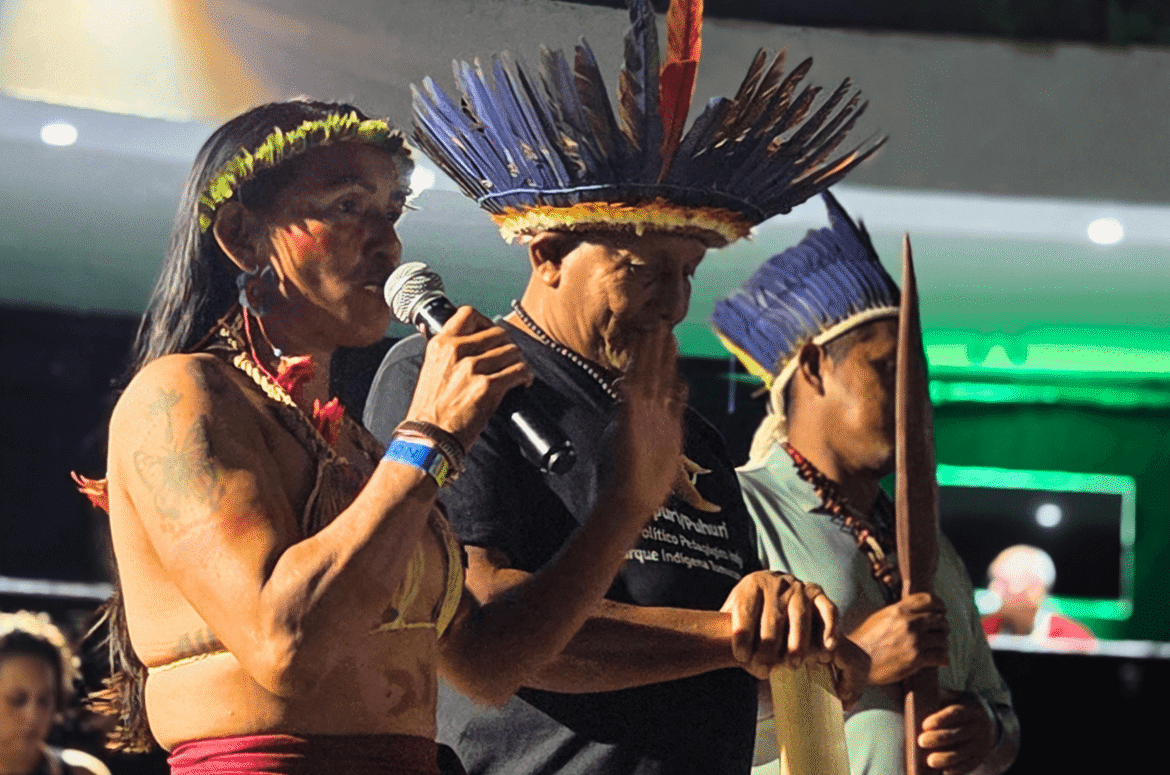
For the Indigenous peoples, the meaning of the PGTA goes far beyond territorial management. Sinezinho Ferreira, one of the Nadëb leaders involved in developing the document, emphasized that the plan represents the history, identity, and journey of his people.
“The PGTA tells our story. It is an achievement of the Nadëb people and a record of our identity, our struggle, and the way we care for our territory. Our livelihood, our culture, and our future all come from it.”
In thanking the partner organizations, Sinezinho emphasized that the launch represents only the beginning of a new phase.
“I thank the partners who have walked alongside us, like ACT-Brasil. But the struggle is not over. It is just beginning.”
Along the same lines, ACT-Brasil Executive Director Luiz Cláudio Lopes da Silva highlighted that the development of the PGTAs reaffirms an approach that has guided the organization for three decades.
“Throughout our 30 years, ACT-Brasil has always entered territories at the invitation of the peoples themselves. It was no different with the Nadëb and Kanamary. Our role was to support the documentation of what you have been doing for generations: putting into a document the ways in which you care for, protect, and manage your territories. Now a new challenge begins: implementing these PGTAs through dialogue, mobilization, and advocacy.”
Tools for Turning Priorities into Action
Recognized by Brazil’s National Policy for Territorial and Environmental Management of Indigenous Lands (PNGATI) as tools for territorial planning and management, PGTAs strengthen Indigenous governance by bringing together, in a single document, the knowledge, agreements, and priorities developed by the communities themselves. At the same time, they guide dialogue with public authorities and support the implementation of public policies focused on Indigenous territories.
The result of a broad participatory process, the two PGTAs organize priorities defined by the communities themselves into thematic areas that guide the management and protection of their territories. In the PGTA for the Paraná do Boá-Boá Indigenous Territory, for example, these priorities are organized across eight areas: governance, territorial protection, education, Indigenous health and medicine, culture and religion, sustainable resource management, infrastructure, and income generation. Together, they guide actions aimed at strengthening ways of life, conserving territories, and promoting the well-being of communities.
More than documents, the PGTAs represent a collective commitment to strengthening Indigenous territorial governance. By bringing together the memories, knowledge, priorities, and agreements developed by the communities themselves, they also serve as tools for dialogue and advocacy, helping ensure that public policies, rights, and concrete actions effectively reach Indigenous territories.
Written by: by Méle Dornelas
Learn more about ACT-Brasil:
Don’t miss these powerful stories and updates. Sign up for our newsletter today!
Share this post
Bring awareness to our projects and mission by sharing this post with your friends.