
From Territory to Global Dialogue: “One Health” Connects Indigenous Knowledge and Public Policy
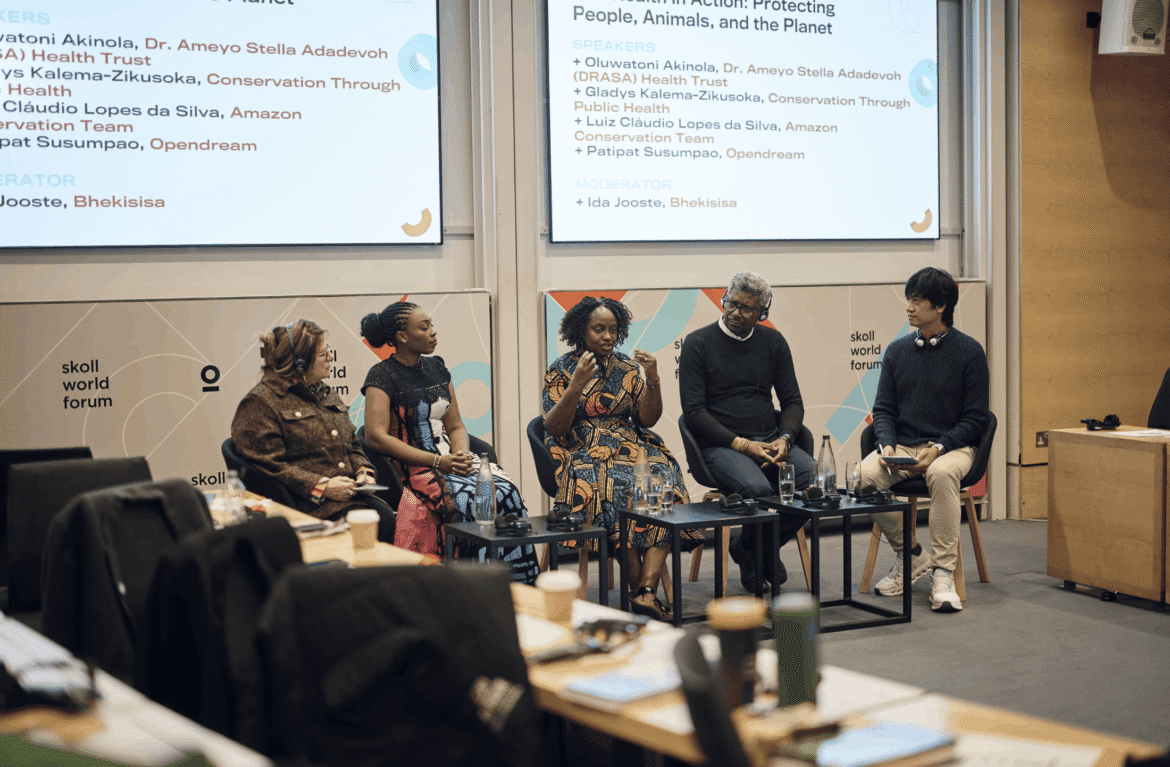
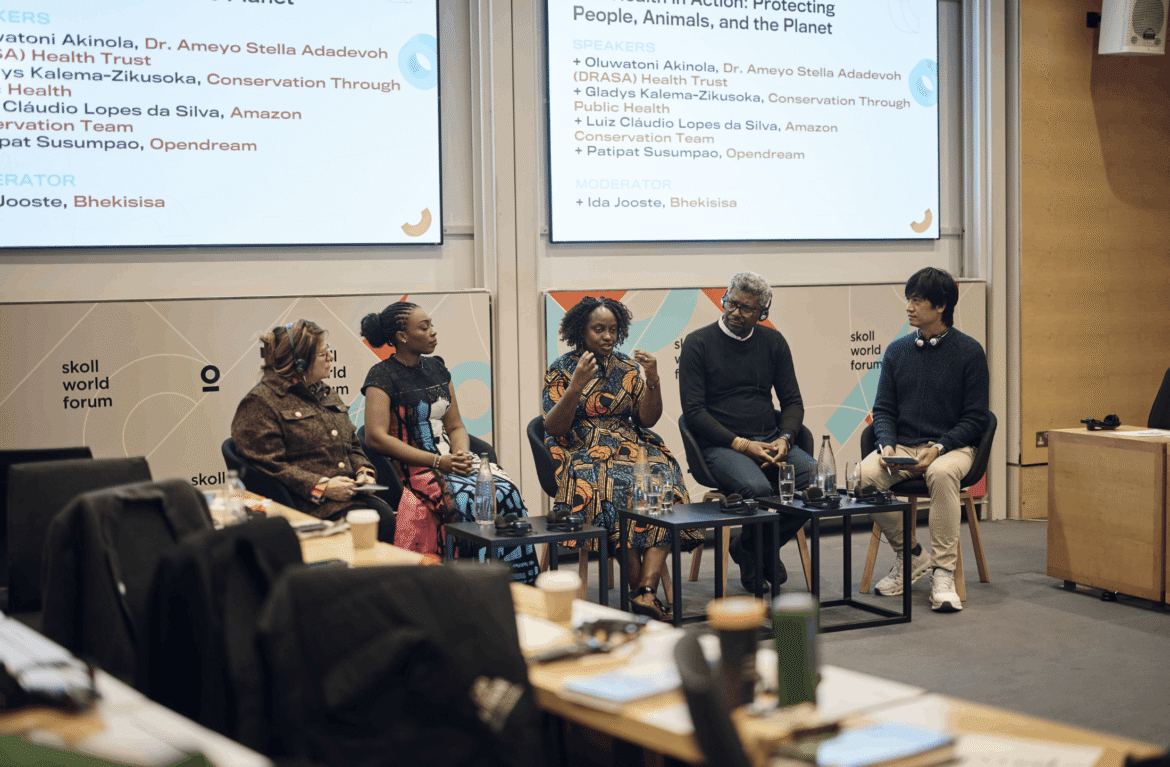
Global discussions on climate, health, and development have increasingly pointed to the need to recognize knowledge systems that already exist within territories and communities. International spaces such as the Skoll World Forum, held from April 21–24, 2026, in England, brought together leaders, organizations, and initiatives from around the world to share solutions to complex social and environmental challenges. Today, the forum is one of the world’s leading platforms dedicated to social innovation, connecting local experiences with international impact agendas.
Within this context, the Amazon Conservation Team (ACT) has contributed to the discussion by advancing the perspective of “One Health,” highlighting the central role of Indigenous peoples in building integrated responses to climate, environmental, and health crises.
Through dialogue with initiatives from other continents, ACT reinforces a key point: the most effective solutions depend on the direct involvement of local communities.
“What we see in different regions is that the most consistent ‘One Health’ strategies emerge from community leadership — whether through the use of technologies, territorial monitoring, or the development of locally rooted solutions,” said Luiz Cláudio Silva, Executive Director of ACT-Brasil, during a panel at the forum.
Health is deeply connected to Indigenous cosmologies, which understand people, nature, and spirituality as interconnected. This understanding has gained increasing visibility in international discussions.
A Recent Milestone in Brazil
In Brazil, this discussion reached an important milestone with the publication of Ordinance GM/MS No. 10.676/2026, which recognizes Indigenous medicine specialists within the country’s public health system.
The measure represents an important step forward by recognizing shamans, midwives, and other specialists identified by their own communities, while respecting their systems of organization and transmission of knowledge.
For Gracimar Yanomami, from the Maturacá village, this recognition responds to an appeal made over generations:
“My people were very happy with this news. We have always demanded recognition for our shamans, midwives, and traditional plant healers. We have cared for our people for a very long time, but we were never recognized by government authorities or health teams. Now, with this achievement, we will see whether this respect truly becomes reality.”
Living Knowledge and Contemporary Challenges
For Indigenous leaders, strengthening Indigenous medicines goes hand in hand with the contemporary challenges faced within their territories.
Demétrio Tiriyó, an ACT-Brasil board member and leader of the Tiriyó people from the Tumucumaque Indigenous Territory, emphasizes that valuing these knowledge systems also means preparing communities to address new health realities:
“We are happy about this ordinance because it strengthens our traditional medicine. Today, we are training new specialists to work with medicinal plants in our communities. But we are also facing diseases that came with contact, such as diabetes and high blood pressure. That is why we are preparing our youth to work in partnership with non-Indigenous healthcare systems without allowing our knowledge to disappear.”
His words highlight that these systems of care are dynamic, combining ancestral knowledge with contemporary strategies while remaining rooted in territory and culture.

Between Recognition and Implementation
Although the ordinance represents progress, it also reveals important limitations. Recognizing Indigenous medicine specialists does not automatically ensure their effective integration into Brazil’s Unified Health System (SUS), nor does it guarantee funding, protection of knowledge systems, or clear mechanisms for institutional coordination.
This scenario reflects a recurring tension: institutional recognition is advancing, but significant challenges remain when it comes to implementation within territories and communities.
A Discussion That Crosses Borders
The Brazilian experience is part of a broader global movement in which different regions are recognizing that addressing contemporary crises requires going beyond the superficial integration of systems and advancing toward the meaningful recognition of historically marginalized knowledge systems.
In this respect, strengthening Indigenous medicines also means strengthening Indigenous territories — and with them, some of the most consistent responses to the climate, environmental, and health crises shaping the present.
Text by Méle Dornelas.