

Isolated Awá Group Emerges in Northeastern Brazil, Raising Alarm for the Forest and Their Health
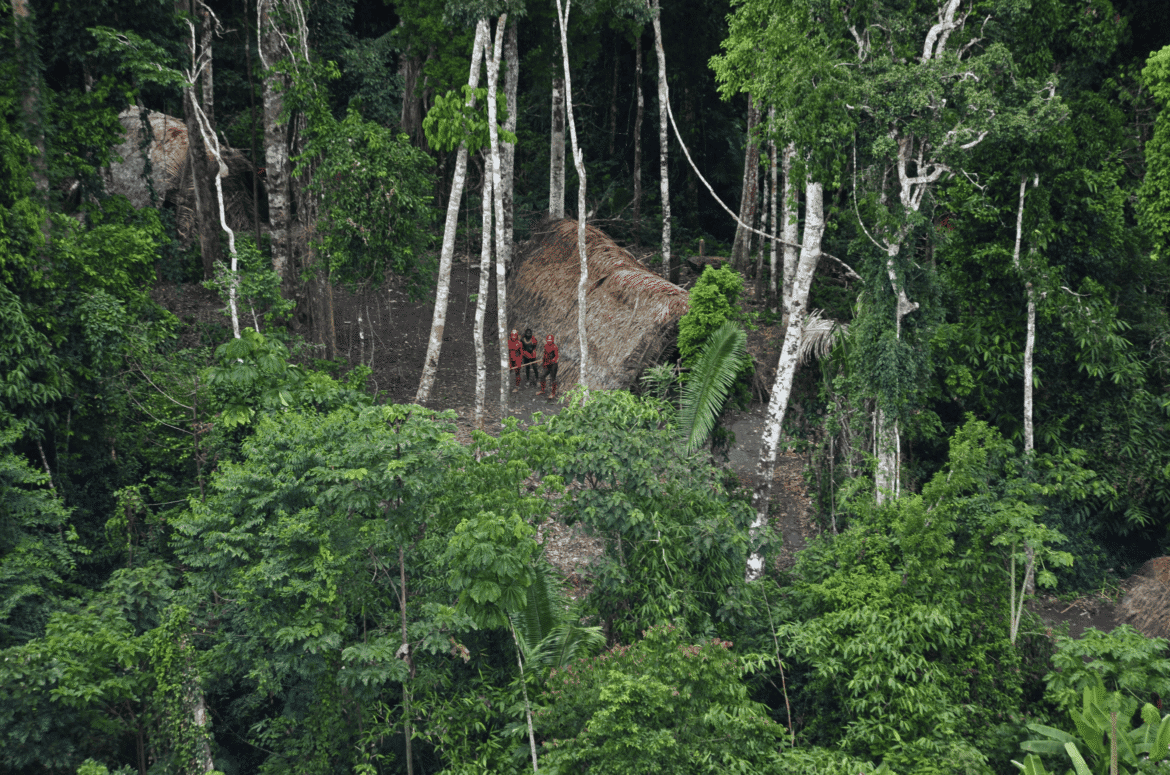
Earlier this week, a group of 20 Awá Indigenous people emerged from isolation in northeastern Brazil and approached a neighboring village. The Amazon Conservation Team (ACT) and GTI-PIACI, a coalition of our partner organizations, estimate that there are 188 isolated Indigenous groups across the Amazon and Gran Chaco ecosystems. These communities, often deep in the forest, have no regular contact with society, or have never interacted with non-Indigenous people.
According to reports from the NGO Survival International, the Awá who approached villagers on Monday asked for yams and then returned to the forest. Beyond the risk of contracting diseases to which they have little immunity, this extremely rare encounter raises questions about the overall health of the lands and waters the Awá depend on to survive.
“This encounter draws attention to the growing pressures on Awá territory and may indicate that isolated Indigenous peoples are moving in response to disturbances in their traditional areas,” explains Maria Emília Coelho, a consultant on isolated Indigenous peoples with ACT in Brazil.
A Territory Under Pressure
Isolated Indigenous groups often inhabit some of the most intact ecosystems on Earth, and their physical and cultural wellbeing are intricately connected to the forests they call home. There are two confirmed groups of Awá living in isolation in the Araribóia and Caru territories in Maranhão, a state in northeastern Brazil. They share a highly deforested and degraded landscape with the Guajajara people, the most numerous Indigenous group in the region. Guajajara villagers noted Monday that several members of the Awá isolated community who approached their village appeared to show signs of hunger and malnutrition.
Isolated peoples in Brazil face multiple, overlapping threats, Coelho notes, including illegal and legal logging, gold mining, land grabbing, road construction, forest fires, the expansion of agricultural and cattle-ranching frontiers, and, increasingly, drug trafficking in border regions. These pressures can reduce access to food, alter migration routes, and raise the risk of unwanted encounters.
That is why when groups such as the Awá emerge from isolation, it’s often not a desired choice, nor one made freely. “In many cases, it may reflect difficulties in accessing essential resources,” Coelho notes. “Therefore, the incident must be analyzed with caution and accompanied by a comprehensive assessment of the territorial conditions that may have prompted this displacement.”
What Happens Next
The Brazilian government, through the Indigenous affairs agencies FUNAI and SESAI, is responsible for implementing a contingency plan that includes coordinating health monitoring and territorial protection.
These measures must be carried out in close coordination with the neighboring Guajajara community. Strict protocols for epidemiological surveillance and conflict prevention are essential to protect both the isolated Awá and the Indigenous communities that have already been contacted, minimizing the health, social, and territorial risks that could arise from this encounter.
Why No Contact Matters
The Brazilian government has a strict policy of “no-contact” that rests on the principle that isolated peoples have the right to remain isolated and to determine their own paths. The aim is not to establish relationships with these communities but to ensure they can stay in isolation if that is their choice. A single approach does not necessarily mean they have abandoned isolation or begun a permanent process of contact.
The policy took shape in the late 1980s, as Brazil democratized and the 1988 Constitution enshrined Indigenous rights. For much of the 20th century, the government had an “attraction” and “pacification” approach, which meant leaving small gifts in the forest for isolated peoples and then, once contact was established, trying to place these communities under state authority. Now, human rights groups and many governments recognize that such approaches are unethical and “no-contact” policies have since become an international benchmark for other South American countries that are home to isolated peoples.
How ACT Is Responding
While we’re still learning more about what may have led to Monday’s encounter, what is clear, Coelho notes, is that protecting isolated peoples starts with protecting their ancestral territories. “Areas occupied by uncontacted Indigenous peoples must remain free from economic activities, development projects, or external interventions that could affect their physical and cultural survival,” Coelho says.
ACT has worked alongside our Indigenous partners to zone more than 7.8 million acres of forest for isolated groups across Amazonia. We also work to address the pressures that drive displacement, by partnering with neighboring Indigenous communities to monitor for encroachment from things like illegal mining, and to support sustainable livelihoods that prevent extractive activities threatening the health of the Amazon. This work aims to ensure that if isolated peoples ever choose contact, they do so on their own terms and not out of necessity.
