

Text by Méle Dornelas · Available in Portuguese.
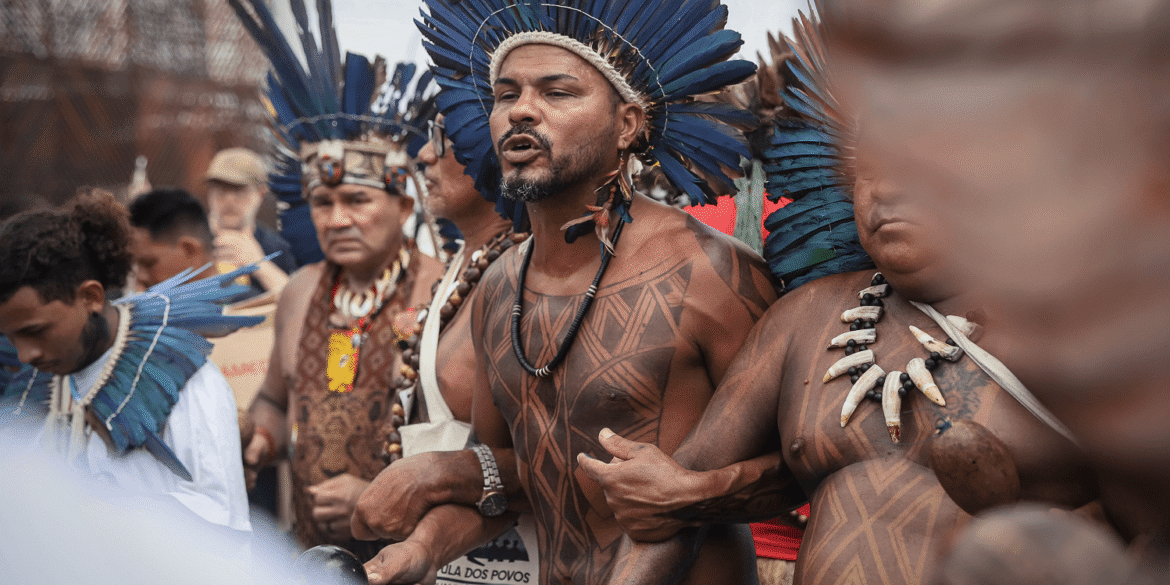
A historic mobilization marks advances in land demarcation and territorial protection. ACT stood alongside communities and helped elevate grassroots leadership in climate decision-making.
The 30th United Nations Climate Change Conference (COP30), held in November in Belém (Pará), was defined by the strength and historic coordination of Brazil’s Indigenous peoples and traditional communities. Through marches, dialogues, and official actions, leaders demanded centering of their communities, denounced inequalities, and celebrated structural achievements.
The conference reached an unprecedented scale: around 1,000 Indigenous people were present inside the conference’s Blue Zone, and more than 5,000 circulated through the city throughout the event. ACT closely followed its partners and amplified a global message: there can be no climate justice without centering ancestral knowledge.
In addition to the strong Indigenous presence, the unified agenda of quilombolas (communities of African origin) gained visibility. The national coordinating body of the movement achieved internal unity and secured the inclusion of the term Afro-descendants in official documents—expanding recognition of Black peoples’ rights and contributions in climate action.
Another milestone was the drafting and submission of the final document of the People’s Summit, which brought together the demands of Indigenous, quilombola, riverine, and artisanal fishing communities, as well as civil society organizations. The document was officially received by the Brazilian government and read aloud in the Blue Zone plenary—an uncommon symbolic and political victory in international climate negotiation spaces.
For the first time, the Forests for the Future Fund (TFFF) also reached the mark of R$ 30 billion raised, signaling progress in discussions around climate finance—though still far from meeting communities’ real needs.
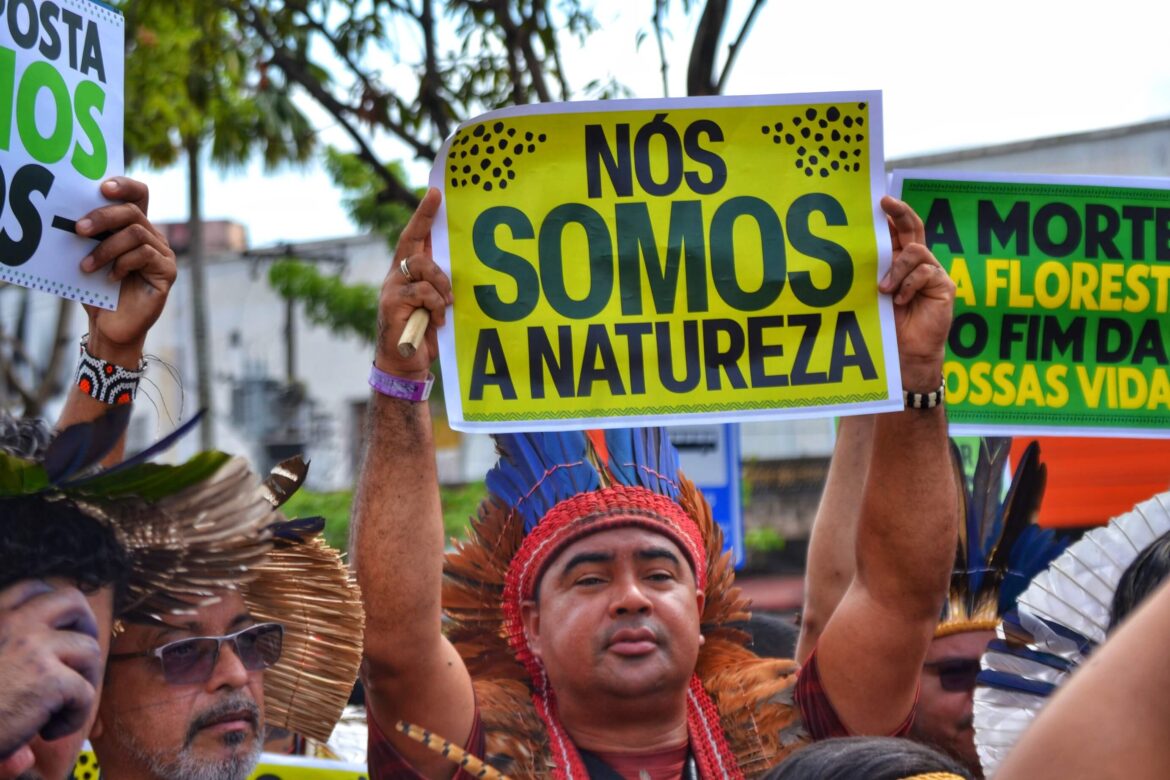
“We Are the Answer”: Climate Justice Marches Mobilize Belém
The debates at COP30 extended far beyond official spaces. Social movements, Indigenous peoples and traditional communities, civil society organizations, and the public took to the streets to broaden and democratize the climate agenda.
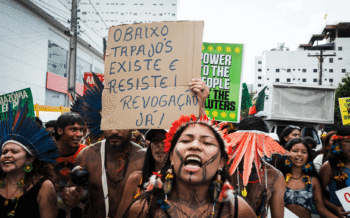
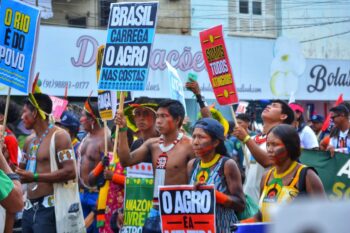
On November 15, the Global Climate March—organized by the People’s Summit—brought together roughly 70,000 participants. ACT accompanied the mobilization alongside Indigenous partners, witnessing the diverse strength of peoples demanding greater presence in global climate decisions.
The march reinforced one of the key parallel demands of COP30: the phaseout of fossil fuels. A symbolic action—“burying” oil, coal, and gas—gained major visibility along the route.
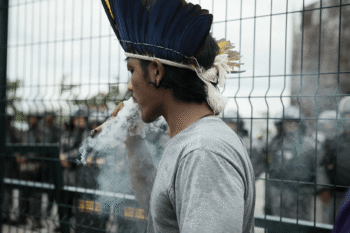
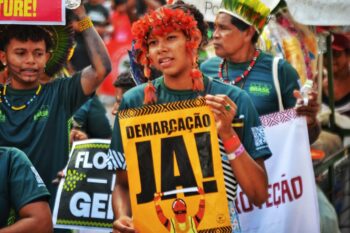
The following Monday, November 17, ACT joined the Global Indigenous Peoples’ March, which gathered thousands in the streets of Belém and marked the beginning of the conference’s second week. Leaders denounced escalating territorial violations and emphasized that addressing the climate crisis requires centering Indigenous peoples and traditional communities.
The chant heard most throughout the march—“We are the answer”—spoke to the defense of ancestral knowledge and traditional practices as foundations for climate solutions. Women, youth, and elders marched together with songs and speeches reinforcing the urgency of protecting their territories.
Land Demarcation: Historic Announcements During COP30
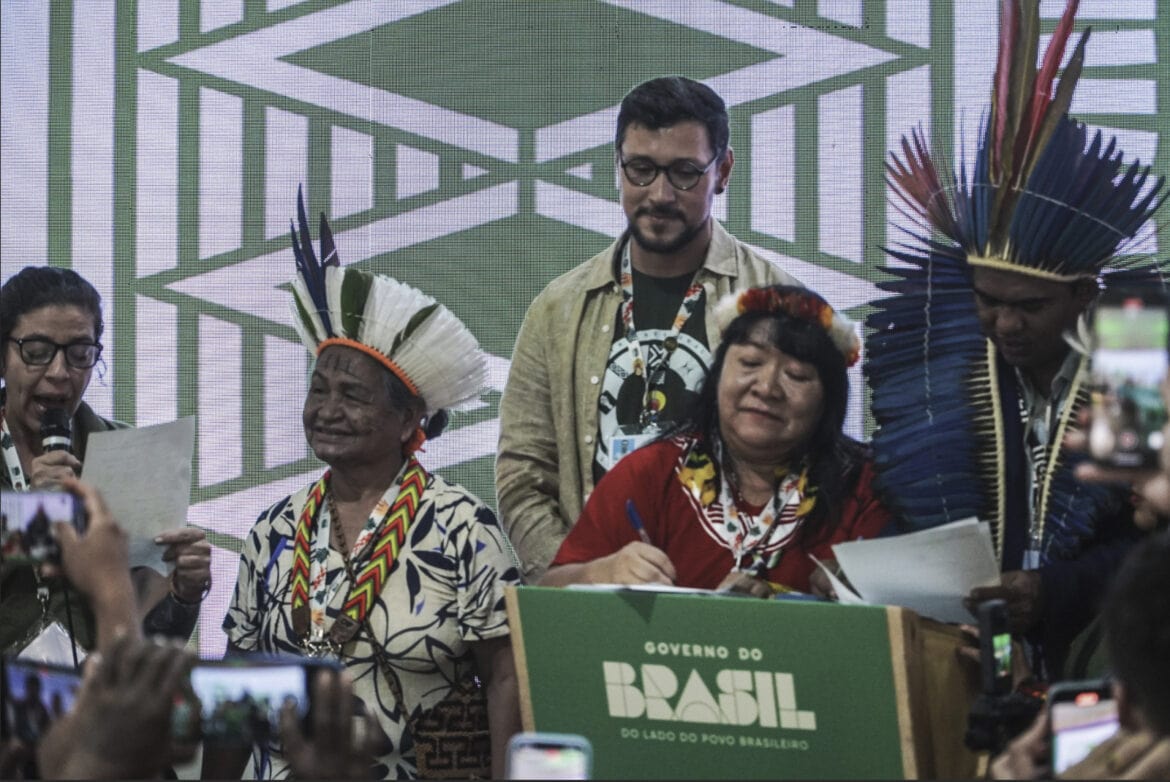
In one of the conference’s most symbolic moments, the president of Brazil’s national Indigenous affair agency (Funai), Joênia Wapichana, signed a series of ordinances representing concrete advances in the demarcation of Indigenous Lands. Some announcements were made during official events, while others were consolidated throughout COP30.
Key advances included:
- Approval of identification and delimitation studies for six Brazilian Indigenous Lands—totaling more than 4 million hectares of traditional territories.
- The creation of seven new Technical Groups (GTs) responsible for multidisciplinary studies. Among the peoples included are the Kokama and Tikuna, whose territorial struggles are supported by ACT and local partners.
- The establishment of ten Indigenous Reserves, a formalization that will now proceed to the study and review phases.
- Signature of ten declaratory ordinances defining territorial boundaries, institutionally reaffirming the rights of these communities.
- Official approval for four Indigenous Lands.
These advances reflect a position long articulated by Indigenous leaders, including Mariazinha Baré, coordinator of the Coordinating Body of Indigenous Organizations and Peoples of Amazonas (APIAM) and a longtime ACT partner: the demarcation of Indigenous Lands is also climate policy.
Images from the signing ceremony, featuring leaders of many peoples, authorities, and partners, symbolize a turning point in territorial recognition and protection.
Warnings and Denunciations: “The World Is Not Listening to Indigenous Peoples”
Despite important gains, significant challenges remain. With regard to global climate finance, there were no concrete signs that wealthy nations will commit to binding commitments proportional to the needs of developing countries. In this arena, Indigenous voices still face a vast gap before they are fully heard.
Throughout the dialogue sessions, Indigenous leaders criticized their limited inclusion in international climate negotiations. As Edinho Macuxi of Roraima stated:
“The world is not listening to the voice of Indigenous peoples. They are talking a lot about environmental protection, but who is talking about those who protect the territories? We will continue insisting that we are the solution to climate change.”
Their demand was clear: more seats, more decision-making power, and expanded direct financing for community-led initiatives.
ACT Strengthens Commitments and Consolidates Partnerships for Climate Justice
Throughout COP30, ACT operated across three major fronts:
1. Alliances with Indigenous Peoples and Civil Society
ACT joined civil society organizations, Indigenous peoples, and grassroots movements to promote urgent responses to the climate crisis and the need for a just ecological and energy transition—inside and outside the official spaces.
2. Reinforcement of ACT as a Territory-Based Organization
ACT reaffirmed its commitment to working closely with communities and strengthened its regional presence with teams from ACT-Brasil, ACT-Colombia, ACT-Guianas, and strategic partners such as the Working Group for the Protection of Indigenous Peoples in Voluntary Isolation and Initial Contact (GTI PIACI).
This coordination expanded dialogues and increased ACT’s impact throughout the event.
3. Consolidation as a Strategic Actor in Climate Policy
ACT participated in and led panels, built alliances, and contributed to foundational debates—solidifying its role as a key organization in shaping climate alternatives.
Its presence at COP30 marks a new phase in which ACT positions itself as a central defender of the sociobiocultural Amazon—both globally and within the territories where it operates.
A highlight was the panel “Paths and Secrets of the Forest: a sociobiocultural perspective on the climate crisis.” Held on November 15, it convened Indigenous leaders, governments, and civil society. With a majority of panelists being Indigenous, 90% Indigenous women from Brazil and Colombia, the event emphasized the power of plural knowledge systems and also launched ACT’s 30th-anniversary celebrations, to take place in 2026.
Strengthening Indigenous Women as an Institutional Strategy
ACT reaffirmed its commitment to supporting Indigenous women’s organizations, actively participating in and backing agendas led by partners including the Union of Indigenous Women of the Brazilian Amazon (UMIAB).
“Supporting women’s organizations is an institutional priority. We believe in their management capacity, their strategic importance, and the strength of Indigenous women,” said Luiz Lopes, executive director of ACT-Brasil.
This stance reflects a broader movement recognizing women’s leadership in territorial governance.

Isolated and Recently Contacted Peoples in the COP30 Document
Together with GTI PIACI, ACT carried an alert to COP30: the urgent need to recognize and protect the territories of Indigenous Peoples in Voluntary Isolation and Initial Contact (PIACI). Among the most conserved regions of the Amazon, these territories function as natural barriers to deforestation and are essential to global climate stability.
After years of advocacy by Indigenous and indigenist organizations, GTI PIACI, with ACT’s support, secured a historic milestone: for the first time, an official COP document recognizes PIACI and highlights the need to guarantee their rights and full territorial protection.
“The Amazon, which stores 340 million tons of CO₂, is a cushion of life for the planet. There live Indigenous peoples in isolation and initial contact, who have chosen self-determination but have no voice to defend their rights. GTI PIACI brings together neighboring peoples and allies to influence States. In Bolivia, this fight led to the titling of 272,000 hectares for the Tacana people and the PIACI,” said Adamo Diego of the Tacana people (Bolivia).
A Milestone for Brazil and for the World
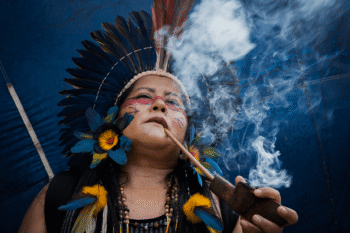
The images of COP30, from historic signings to massive street mobilizations, capture a turning point in the interface between global climate politics and the organized strength of Indigenous peoples and traditional communities. The events in Belém demonstrated that when these peoples occupy decision-making spaces with unity and strategy, their messages ca reverberate far beyond institutional structures, shifting agendas and pressuring governments, funders, and multilateral bodies.
Yet progress coexists with contradictions. While land demarcation has regained political momentum, the global climate finance architecture remains far from what is needed to strengthen community initiatives and protect territories—an essential element for preventing climate collapse. The gap between international rhetoric and actual investment remains one of the greatest challenges.
COP30 in Belém enters environmental history not only because the Amazon hosted it, but because Indigenous peoples asserted—powerfully—that no climate transition is possible unless their territories, knowledge systems, and ways of life are placed at the center of decision-making.
ACT will continue monitoring developments from the conference, strengthening alliances, expanding advocacy, and supporting Indigenous leaders and organizations in the fight for climate justice. The planet’s climate future depends, non-negotiably, on empowering those who hold ancestral knowledge—and that message echoed in Belém and across the world.

COP30 in Images
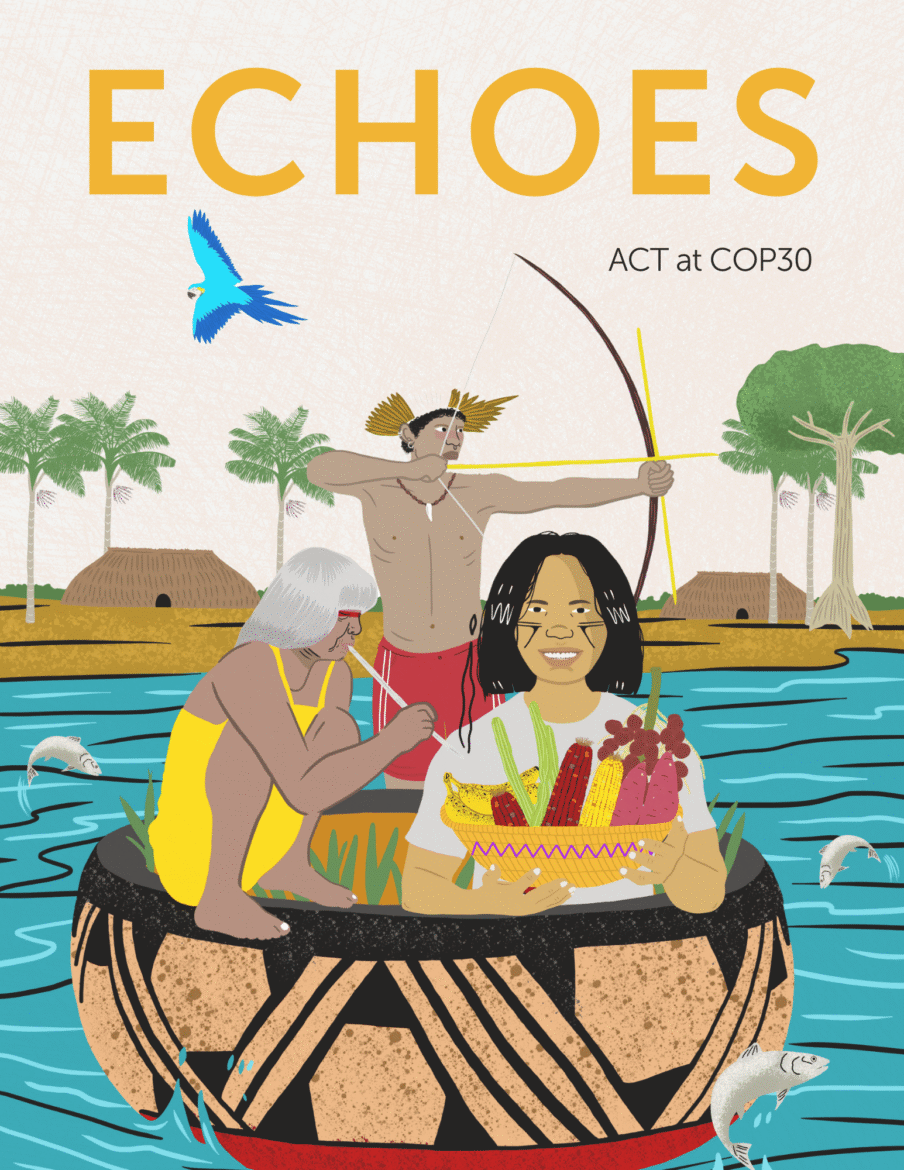
Explore our COP30 Digital Magazine
“ECHOES is the sound that returns, the reflection that transforms, the memory that endures. At COP30, ACT seeks to echo the voices of the Amazon — voices that express the strength of its peoples, the knowledge inherent in its territories, and their commitment to conserving life.”
Available in English, Portuguese, and Spanish! Access it now: Echoes Magazine: Indigenous Voices and Conservation at COP30 – Amazon Conservation Team
Don’t miss these powerful stories and updates. Sign up for our newsletter today!
Related Blog Posts

Share this post
Bring awareness to our projects and mission by sharing this post with your friends.