Share this post
The Amazon Conservation Team (ACT) is monitoring the potential spread of Witches’ Broom disease in cassava crops across the Guianas. The fungal pathogen Ceratobasidium causes broom-like shoots and can sharply reduce yields of one of the world’s most important staple foods.
“Cassava is the major food crop in these regions imagine what crop failure would mean,” Dr. Mark Plotkin, ethnobotanist and ACT president, said. “For millions of families, it’s the equivalent of corn failing in North America.”
More than 700 million people across tropical America and Africa depend on cassava daily. Domesticated over 8,000 years ago in the southern Brazilian Amazon and Bolivia, it remains central to the diets of Indigenous and Afro-descendant communities with whom ACT partners.
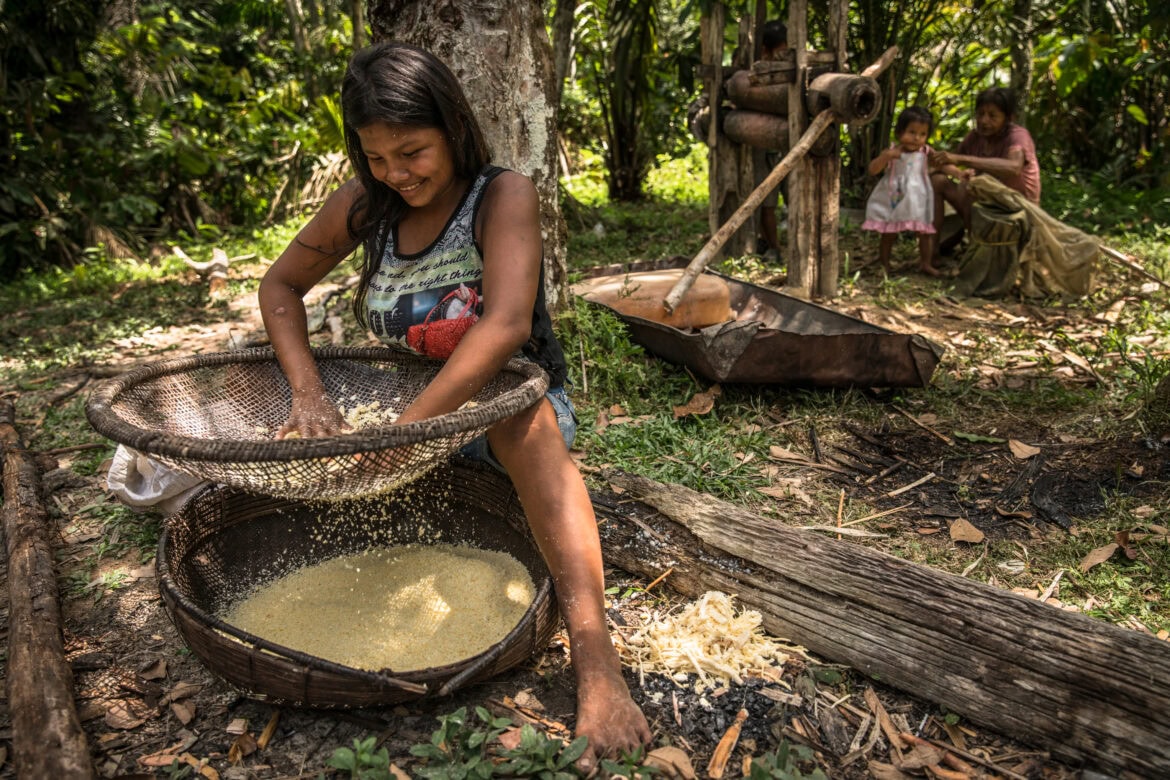
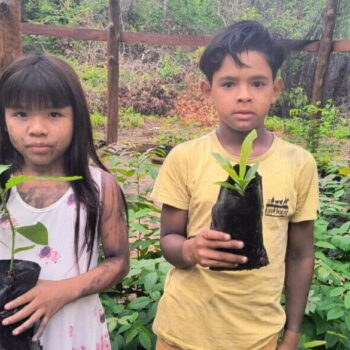
Indigenous forest gardens preserve remarkable crop diversity—sometimes hundreds of cassava varieties—but this diversity is declining due to multiple pressures as the outside world and climate change press in. “One Indigenous group in Brazil maintains over 209 varieties, while others maintain more than 100,” Dr. Plotkin noted. “Losing this diversity puts everyone at risk.”
Witches’ Broom disease impacting cassava was first reported in French Guiana in 2023 and in Brazil the following year. The same strain first appeared in cacao crops in Asia in the 1970s, signaling a potential threat to the chocolate industry in South America. While impacts of the fungus on cassava yields remain limited currently, ACT is working with government partners in Suriname to monitor its spread. In November, a working group launched a national survey using KoboToolbox, with ACT-Guianas supporting distribution and assisting Indigenous and tribal communities in submitting responses.
“We’re ensuring our partner communities’ observations are included in national data, and we are ready to support community-based monitoring and preventive farming practices,” said Mercedes Hardjoprajitno, ACT-Guianas research and monitoring manager.
For more information:
Contact communications@amazonteam.org