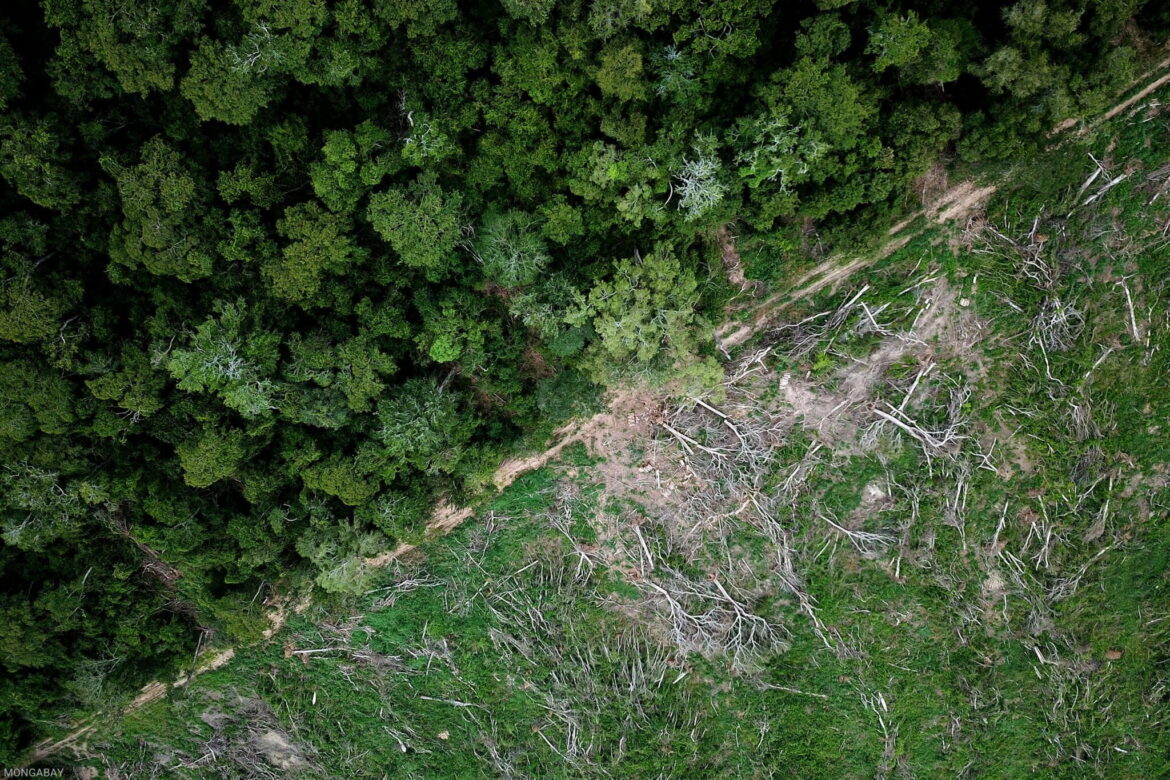
In a new commentary for Mongabay, Dr. Mark Plotkin, ethnobotanist and President of the Amazon Conservation Team, argues that large-scale…
Staff from the Amazon Conservation Team are featured across multiple episodes of Rewilding Amazonia, an eight-part investigative podcast series from Rewildology examining what…
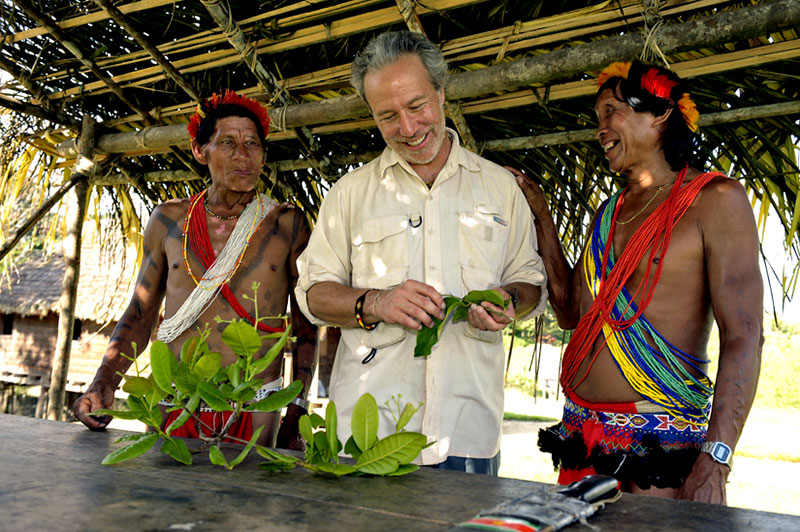
As a new executive order fast-tracks psychedelic research for veteran mental health treatment, WWLTV turned to Dr. Mark Plotkin, co-founder…
The Amazon Conservation Team works closely with Indigenous communities to create cultural maps that record and preserve traditional knowledge and…
Juan Carlos Cruz, Manager of Science and Conservation with the Amazon Conservation Team’s Ancestral Tides initiative, recently joined the Oceanography…
February 20, 2026 The original article published in Spanish by La Silla Vacia can be found here. Written by Juana…
As the world gathers for COP30 in Belém, Brazil, Dr. Mark Plotkin, co-founder and president of the Amazon Conservation Team,…
Carolina Gil, regional director for the Amazon Conservation Team, wrote the following op-ed, published in the Colombian digital news outlet…
Mongabay, an independent environmental news organization, recently highlighted two communities in the Colombian Amazon, who are working to protect the…
Carolina Gil, Regional Director of the Amazon Conservation Team Colombia authored this op-ed, published August 27, 2025 in El Espectador,…
The survival of the Amazon has great ramifications for life across the planet. A healthy and intact Amazon forest will…
Modernity has brought with it swift and abrupt changes to the cultures of traditional indigenous communities, and has historically left…
The Amazon Conservation Team (ACT) protects the rainforest by working in close partnership with indigenous peoples. Our approach combines idealism,…
The mapping of indigenous lands has been one of ACT’s most powerful tools in conserving the Amazon rainforest in partnership…
The Amazon Conservation Team seeks to steadily increase the number of indigenous peoples in Amazonia able to monitor, sustainably manage…
In Sibundoy, the ancestral territory of the Kamentsa and Inga indigenous people, both the elders and lands that sustain traditional knowledge are disappearing. To keep pace with climate change, globalization and the region’s mining development, local groups are banding together to record this information before it disappears.
Indigenous representatives of the Caquetá department are participating in the Congress of Indigenous Communities, an activity that is part of a project to strengthen the indigenous organizations of Caquetá, executed by the NGO Amazon Conservation Team (ACT).
It is hard for me to believe that I will have lived on planet Earth for 80 years as of this Thursday. I was born on April 3, 1934 and the world has changed in almost all ways possible. I write this article from a laptop computer while flying in an airplane to Nebraska, where I visit every year to see the migration of the majestic Sandhill cranes…
“What’s wrong with your foot?” asked the medicine man as I ducked into his grass hut to escape the tropical downpour. He could see that I walked with a slight limp. Like many an aging athlete, I had injured myself while training for a hike. I knew I had to condition myself to be able to walk 50 miles carrying a backpack at 9,000 feet.
As you watch the NBA playoffs this spring, impress your friends with this fact: the idea for those Nikes worn by LeBron James and Kevin Durant was actually born in the rainforests of the northeast Amazon.
In 1775, French botanist Fusee Aublet observed local Indians there coating their feet with rubber tree sap and holding their feet over the fire, creating the first custom-made athletic shoes.