

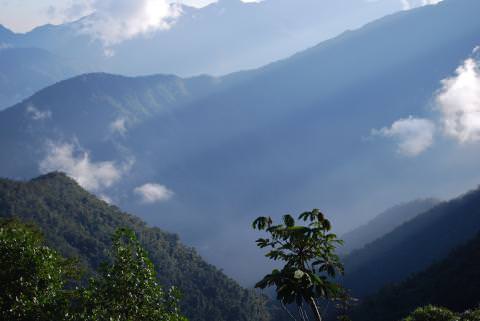
Mocoa, Colombia: One Year After the Landslide
“…This magical land of water and rainforests is a giant water factory, much threatened by reckless development which is poorly planned and badly executed. The indigenous people who make their home have cautioned about deforestation, against building a road that caused enormous damage, resulting in landslides that killed well over a thousand people. Despite repeated warnings that were ignored by “experts,” on April 1, 2017, a disastrous avalanche destroyed much of the village Mocoa taking with it hundreds of lives mostly children and displacing thousands of families…”
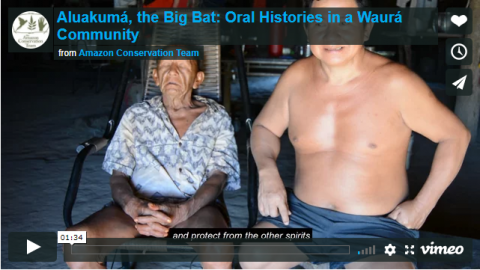
Aluakumá, the Big Bat: Oral Histories in a Waurá Community
Oral Histories in a Waurá Community: In the village of Ulupuene, which partners with ACT, two elders and community leaders passed away: the regional “keeper of songs and dances,” Yakuana, who took with him a vast wealth of knowledge about Waurá cultural practices; and most recently, Aluakumá (“Big Bat”), a village elder, shaman, and healer. Both men were revered, and their kin expressed that they had lost more than just a loved one—they had lost an unrecoverable repository of cultural knowledge.
Enhancing Youth Awareness About Suriname’s Extraordinary Natural Richness
Earlier this year, a completed series of Junior Park Ranger guides was presented during a special event in at the Tori Oso cultural center in Suriname’s capital city of Paramaribo. The purpose of the series is to enhance the awareness of both indigenous and non-indigenous students regarding Suriname’s extraordinary natural richness.
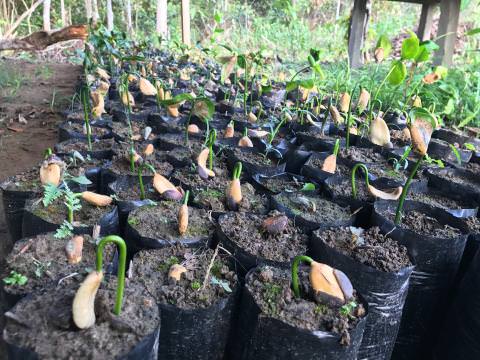
Elías García, the Guardian of Native Seeds
On the banks of the Caquetá River, in Colombia, lives Elías García Ruíz, a member of the Murui Muina indigenous group who collects and cultivates native seeds such as that of the cacay tree (Caryodendron orinocense), which is disappearing from their territory because of selective logging of trees of high commercial value and an alarming advance of deforestation.
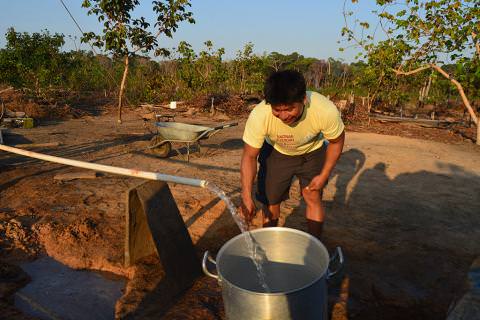
Clean Water for a Model Amazon Village
The Waurá of the Ulupuene village in the Xingu, Brazil came to us with a problem: their water supply had become contaminated by soybean crop pesticides. These pesticides are carried annually to the rivers of midwestern Brazil, often rendering the water unsuitable for human consumption. The Waurá had one request: clean water drawn from an open deep well with the support of the Amazon Conservation Team.
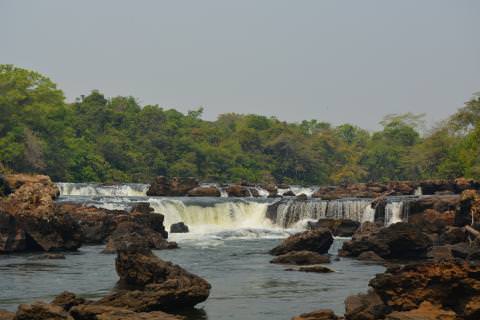
School of the Arts: Ulupuene Villagers Visit Their Sacred Cavern
An important piece of this effort is allowing Waurá youth to experience sacred sites that, until now, have only existed in their imaginations and the stories of their elders. Because of this effort, we were thrilled when we were given the opportunity for ACT to visit Kamukuaká Cave, one of these sacred sites, with several Waurá villagers from multiple generations.
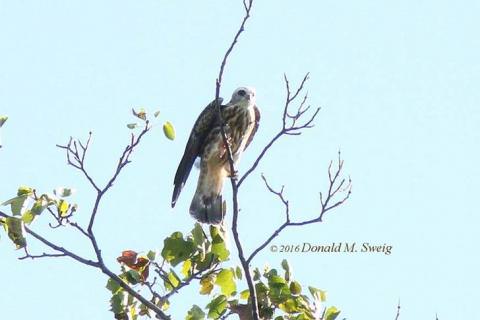
Debut of Mississippi Kite in the U.S. Capital Area Prompts Reflection on Climate Change
In 1987, my friend Dr. Rob Peters and I were having dinner somewhere in Woodley Park on a temperate June evening. Although I had been involved in tropical forest conservation in Costa Rica, climate change was not a hot topic at the time. Rob, a biologist , began talking about his research. I remember his agitation at the fact that people were not paying attention to what he felt was a looming catastrophe for humanity: the rising temperature of our atmosphere.
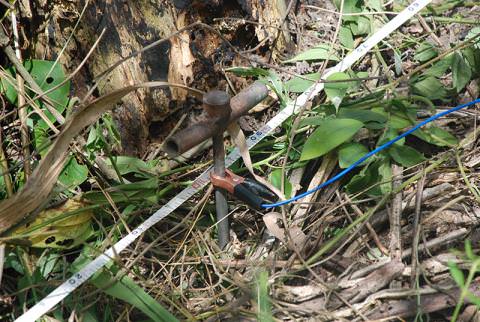
Drilling for drinking water in remote Sipaliwini, Suriname
In May 2016, Roché Bhola, one of ACT-Suriname's field station managers, traveled for several weeks to the Trio indigenous village of Sipaliwini together with Dr, Anthony Druiventak, geology professor at Anton de Kom University of Suriname and Joanne Perk, a student from the department of mineral resources at the same university. Sipaliwini is one of…
Trio Community and Universities Join Forces to Monitor Forests
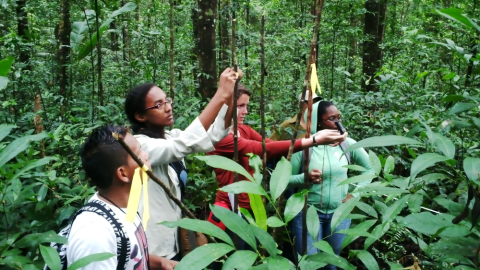
The 2016 fieldwork for ACT’s joint project with the University of Utrecht and Surinamese universities is right around the corner. Since 2015, in southern Suriname, ACT has been conducting research in the Trio indigenous village of Kwamalasamutu, focusing on topics defined by the community.
Restoring Forest Continuity and Empowering Communities: An Interview with ACT’s María Patricia Navarrete Serna
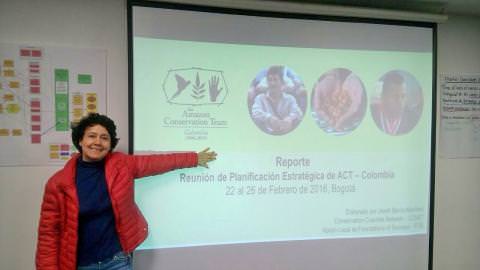
María Patricia Navarrete Serna is the Program Coordinator for ACT’s large-scale project Connected Landscapes in a Fragua-Churumbelos Conservation Corridor in Colombia. We were able to interview her and learn more about her past work, her current projects, and why she enjoys working for the Amazon Conservation Team.