

Share this post
February 20, 2026
The original article published in Spanish by La Silla Vacia can be found here.
Written by Juana Hofman – Director of Technical Territorial Integration at the Amazon Conservation Team Colombia and professor at the Universidad del Rosario.
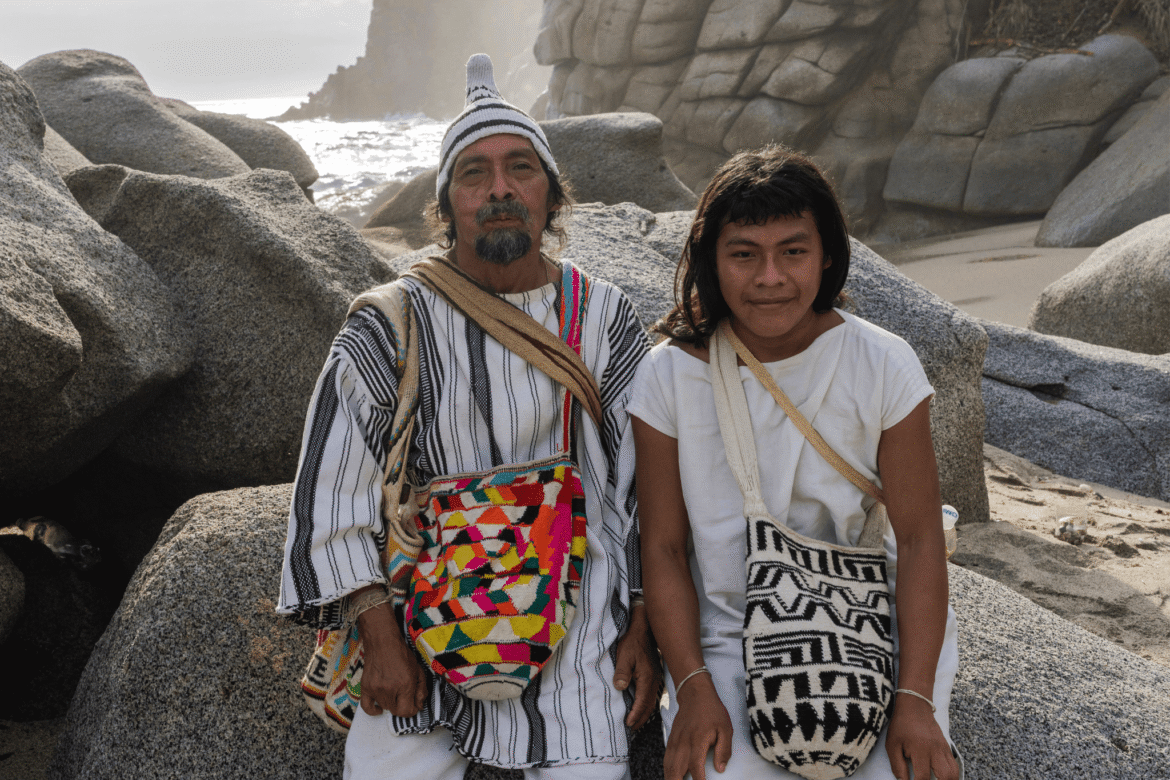
Yesterday’s decision by Colombia’s Council of State (Consejo de Estado) to annul, for formal and not substantial reasons, Decree 1500 of 2018 puts in check something more than an administrative act. What is at risk are the advances in the protection of the territorial rights of the Indigenous peoples of the Sierra Nevada de Santa Marta, the effective guarantee of ethnic and cultural diversity and, on a more structural level, the coherence of the Colombian State as a social state of law that recognizes itself as multi-ethnic and multicultural.
This is not an isolated technical debate. The annulment reopens a substantive discussion on the real scope of legal pluralism and on the validity of the principle of non-regressivity in human rights. When progress in territorial recognition can be undone by a technicality, the question is inevitable: how solid are the State’s commitments to the autonomy and cultural integrity of Indigenous peoples?
What is the Linea Negra and why does it matter?
The Linea Negra is not a metaphor. It is the ancestral system that delimits the spiritual and cultural territory of the Arhuaco, Kogui, Wiwa and Kankuamo peoples. It is made up of hundreds of interconnected sacred spaces – 348 identified in the decree – that make up a georeferential polygon that integrates sea, rivers, mountains and ceremonial sites.
Since 1973, the Colombian State had symbolically recognized this delimitation. Then, in 1995, it updated his understanding by recognizing that the Indigenous peoples had delimited their territory by “black lines” that link sacred landmarks. Later, the Colombian Constitutional Court reinforced this protection. In Judgment T-849 of 2014, the Court clearly stated that the Linea Negra is an area of special protection and that the State’s commitment is not limited to a few isolated points, but to the entire geo-referential space that composes it.
Decree 1500 of 2018 did not come out of nowhere. It was in response to a court order and the recognition that previous rules were insufficient and outdated. It was developed as a “government to government” act, after years of expeditions through the sacred sites, technical discussions with entities such as the Agustín Codazzi Geographic Institute (IGAC), and the deep spiritual work of the mamos (spiritual leaders of the Indigenous peoples of the Sierra Nevada de Santa Marta). It was, in essence, a bridge between the Indigenous groups’ “Law of Origin” and the state legal system.
More than a decree: legal pluralism in action
Legal pluralism is the recognition that different regulatory systems coexist in Colombia, and that the law of Indigenous peoples has legal and constitutional value.
Decree 1500 realized this pluralism: it recognized that the delimitation of the territory cannot be understood only from cadastral maps and administrative boundaries, but also from cosmogony, spirituality and the Indigenous peoples’ Law of Origin. It incorporated into the state order a different understanding of territory: not as a resource, but as a living fabric of spiritual, cultural and ecological relationships.
Annulling it on a purely formal basis raises an uncomfortable question: how far are we willing to go to make legal pluralism real and not rhetorical? If the incorporation of the Indigenous vision into state law can be reversed by a formality, the message is disturbing.
The principle of non-regressivity at play
The principle of non-regressivity in human rights implies that the progress made should not be reversed, except under strict standards of justification. This principle is especially relevant with respect to the territorial and cultural rights of Indigenous peoples, who have historically faced dispossession and marginalization.
The expanded and updated reconnaissance of the Linea Negra was a concrete advance. It did not create a new privilege; on the contrary, it corrected a historical insufficiency. Reversing this progress generates an obvious risk of regression in the protection of territorial autonomy and cultural integrity.
And it is not just four communities. The Linea Negra is called the “heart of the world” by its peoples because it unites strategic ecological systems, water sources and environmental balances that transcend any administrative border. Their protection has implications for regional and national ecological stability.
The Council of State decided to annul Decree 1500 of 2018 for two formal reasons. The first: that at the time of its issuance, a definitive map had not been incorporated where the polygon of the Black Line was delimited with total precision. However, the creation of that cartography was not an element foreign to the decree nor a requirement simply omitted. On the contrary, it was a task that arises from Decree 1500 itself as part of its implementation and the process of government-to-government coordination between the State and the Indigenous authorities.
For years, joint technical and spiritual work was carried out that included expeditions, territorial validations and georeferencing exercises. As a result, the Agustín Codazzi Geographic Institute (IGAC) issued the corresponding map, developed in a consensus manner and in dialogue with the four communities. This cartography is now part of the official maps of the Colombian State and is integrated into the public territorial information systems. It was not, then, a question of a subsequent improvisation, but of the fulfillment of a roadmap provided for in the same decree and developed in terms of institutional and intercultural coordination.
The second reason provided was an alleged lack of prior consultation with other peoples who might be considered “impacted”. This argument raises fundamental questions. On one hand, it ignores that Decree 1500 recognizes a pre-existing ancestral territorial system, historically defined by the Arhuaco, Kogui, Wiwa and Kankuamo peoples. On the other hand, it ignores that in the Sierra Nevada and its surroundings there have existed, since ancient times, relationships of dialogue and exchange between different Indigenous peoples, mediated by their own traditional authorities and by their own regulatory systems.
In addition, the decree is explicit in pointing out that it does not alter the acquired rights of third parties or modify the consolidated legal situations of individuals or other communities. It does not redefine municipal boundaries, transform property titles, or create automatic general prohibitions. What it does is to reinforce a regime of special protection over sacred spaces, consistent with constitutional jurisprudence and with the State’s duty to protect ethnic and cultural diversity.
In short, the annulment is based on procedural aspects that do not question the substantive content of the decree or the legitimacy of the territorial recognition. And it is precisely there where the concern arises: when the form ends up neutralizing a substantial advance in the protection of collective rights, the debate ceases to be merely administrative and becomes a structural discussion about the coherence of the State with its constitutional commitments.
Fears that resurface
Since the decree was issued, trade unions and economic sectors have warned – often without rigor – that its application would “paralyze the development” of three departments or that any activity would require prior consultation. That discourse, by sectors that have also celebrated the annulment since yesterday, simplifies and distorts the scope of the law.
The decree did not prohibit development. It established rules of protection and coordination in a recognized ancestral territory, in accordance with constitutional jurisprudence and the obligation of prior consultation. What bothered the aforementioned sectors was not the legal technique, but the effective recognition of limits to extractivism and expansion without dialogue.
The annulment reopens a scenario of legal uncertainty in a region intersected by intense socio-environmental disputes: port projects, mining interests, urban expansion and macro-crops. In this context, weakening the comprehensive protection of the Linea Negra is not a neutral action.
What kind of nation do we want to be?
The underlying discussion is whether the Colombian State is willing to sustain, with institutional coherence, the progress made in the recognition of Indigenous territorial rights.
The Linea Negra also conveys an ethical and political message: to listen to the wisdom of the elders, of the mamos, of the peoples who have inhabited that territory for thousands of years. To ask ourselves what kind of society we are if we are not capable of recognizing that there are other legitimate ways of understanding and organizing the world.
This moment demands more than emotional reactions. It requires rigorous legal reflection, inter-institutional dialogue and an active defense of the principle of non-regressivity. It requires understanding that legal pluralism cannot depend on technicalities.
The annulment of Decree 1500 of 2018 is not the end of the story. A judicial decision does not create or undo an ancestral territory: the Linea Negra exists because it exists in the Indigenous peoples’ Law of Origin, in memory, in spiritual practice and in the living tissue that peoples have cared for for millennia. Spirituality is not annulled by a sentence; on the contrary, today it is reaffirmed and cohesive and calls for collective action. Nevertheless, the decision is an institutional alert. It is an opportunity – and a responsibility – to reaffirm that the defense of the Linea Negra is not an identity or symbolic gesture, but a condition for the physical and cultural survival of four peoples and for the protection of a strategic ecosystem that sustains the balance of the so-called heart of the world.
In short, it is the defense of the heart of the world.
Media Relations
For press release inquiries, please contact us at info@amazonteam.org.